

A WIDER LENS
CELEBRATING 10 YEARS OF HOMESPACE
2024/25
Report to Community

-
A Home For Everyone In Our Community
-
We creatively apply our expertise to increase and manage the number of affordable and specialized housing units in Calgary
-
Dignity, Innovation, Growth
-
HomeSpace is a leading non-market housing provider that builds, maintains and manages housing for vulnerable Calgarians. Our mandate goes beyond real estate development; we are a compassionate force committed to reshaping lives through non-market housing solutions.
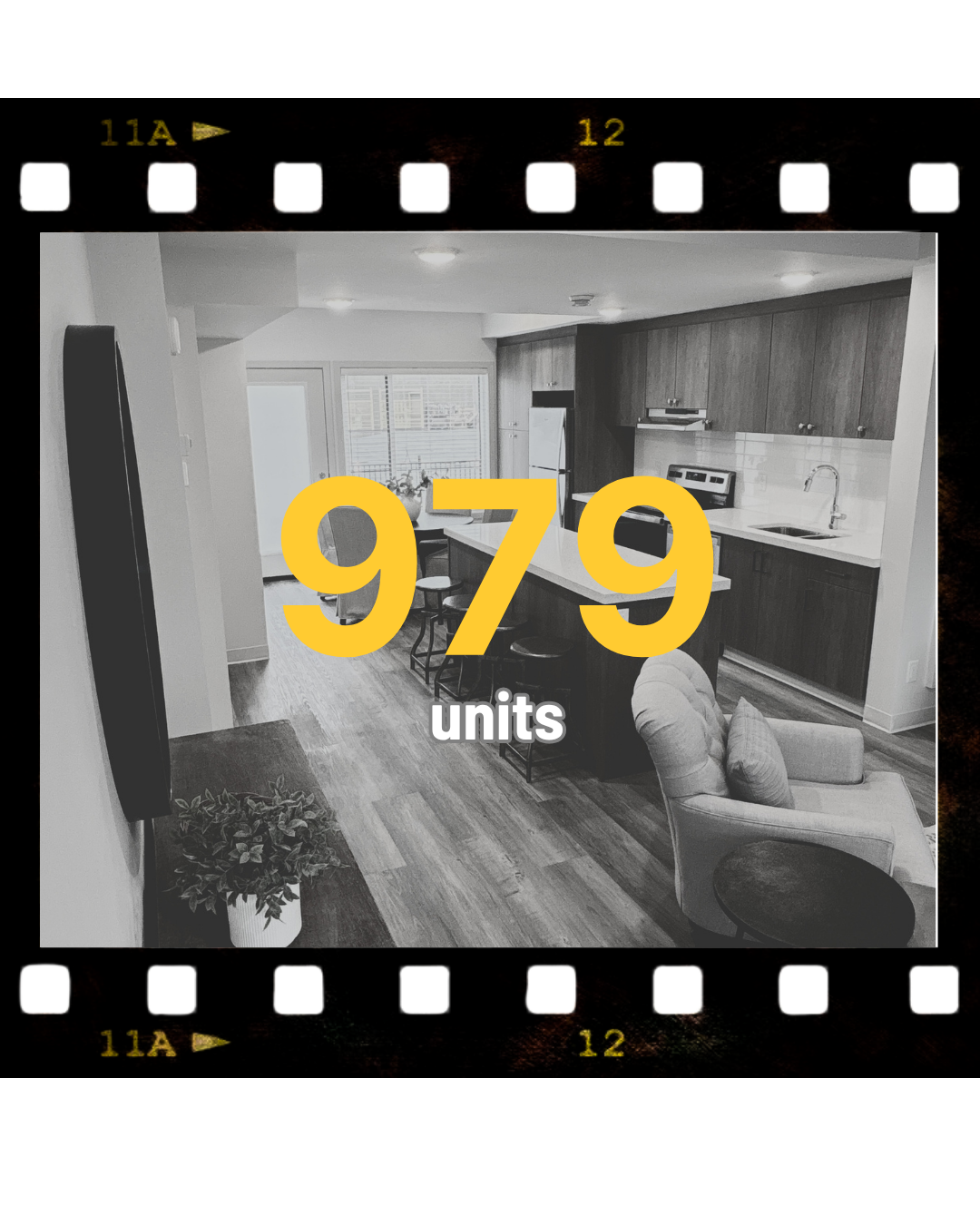
Since our establishment as an independent non-profit in 2016, our housing growth has been remarkable. We have swiftly expanded from 390 rental housing units in 20 buildings to an impressive portfolio of 979 units across 36 properties, serving over 1500 Calgarians. In each of our properties, we partner with a social service agency that provides wrap-around support to keep our residents safely housed and connected with the resources they need to thrive.
Our focus is on providing not just shelter but genuine homes – safe, suitable, and affordable places designed to nurture the well-being of some of the city's most vulnerable individuals and families. We support a housing-first approach to solving homelessness and have a strong growth mandate to develop more specialized, permanent, affordable housing to address the housing crisis.
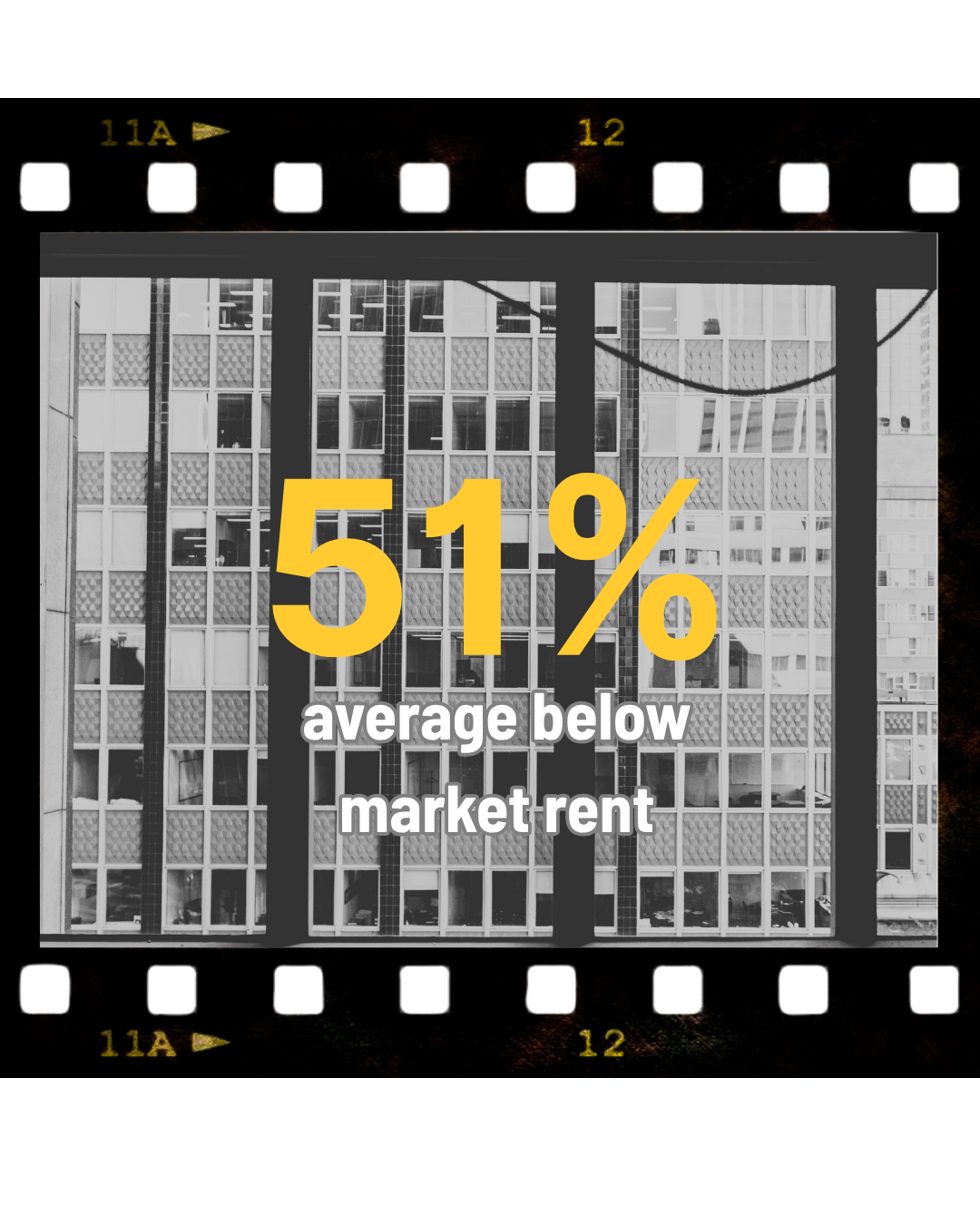
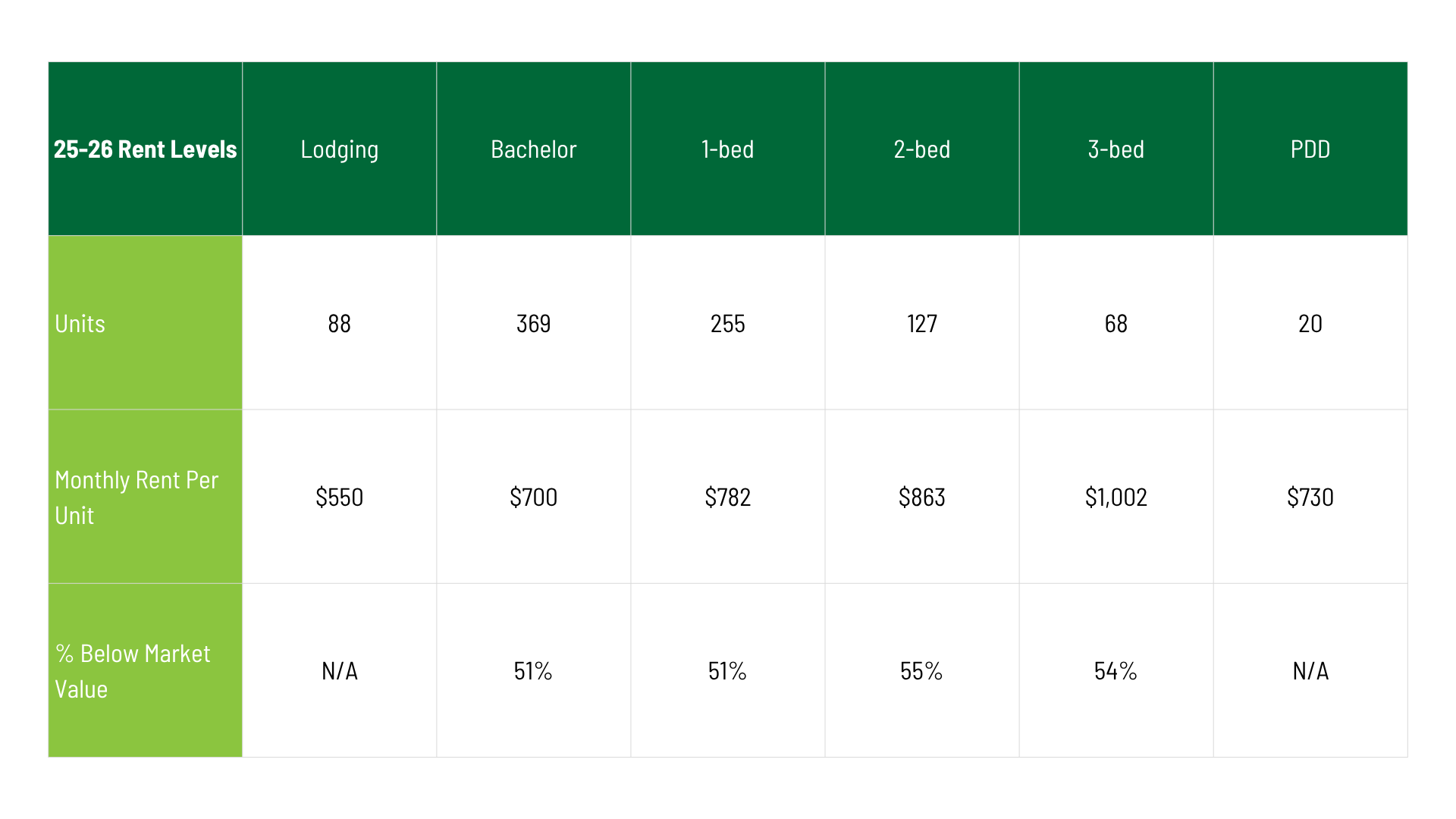
HomeSpace offers monthly rates that are consistently 30-50% below market rent rates and provides extreme value to our city, donors, partners and sponsors and those who live in our buildings. With each new project, we creatively apply our expertise to increase and manage the number of affordable and specialized housing units in our community.
HomeSpace Society is a stand-alone entity and registered charity governed by a Board of Directors, made up of people who are experts in fields such as homelessness research, real estate, finance, governance, and business.



A note from our CEO
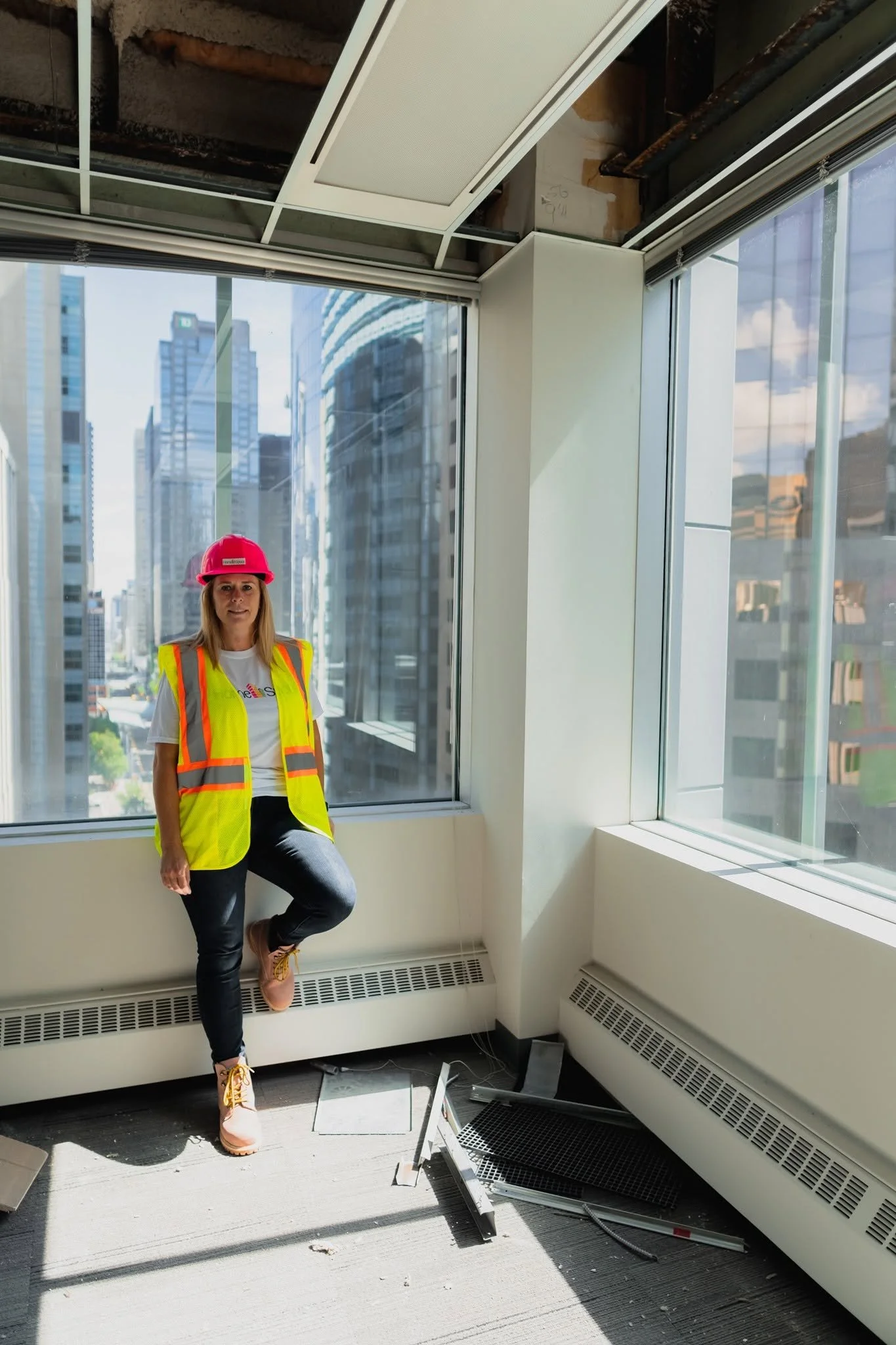
As HomeSpace marks its 10th anniversary, I find myself reflecting on our journey through two perspectives.
One is to zoom out – to look at how far we have come as an organization and as a community. The other is to zoom in – to recognize the people, partnerships and everyday moments of dedication that have made this work possible.
When HomeSpace was created, the vision was simple: a home for everyone in our community.
At the time, many organizations were working to create housing while also delivering the critical supports people needed to thrive. We believed there was an opportunity to do things differently – to create a dedicated organization focused on building and operating non-market housing, while partnering with agencies whose expertise was supporting those most in need. By focusing on what we do best and working together with those who bring different expertise, we created a model built on collaboration, shared responsibility and a common goal: helping more people find a place to call home.
Ten years later, that model holds. HomeSpace has earned its place as a trusted partner—an organization that can step into complex challenges, bring people together and deliver.
But the environment has changed.
The housing crisis today looks different than it did a decade ago. Needs are more complex, and the toxic drug crisis has reshaped what supportive housing looks like. While our ability to develop housing has grown stronger through experience, relationships and innovation, the work of operating our buildings and supporting residents has become increasingly challenging.
So, we zoom in.
Over the past decade, we have created nearly 1,000 homes. We have converted office buildings, created specialized housing and taken on projects others believed were too complex. We have been willing to innovate, take risks and pursue opportunities that matter, not only for HomeSpace, but for our City and ultimately for the people we serve. Projects like Neoma reflect that commitment: a willingness to think differently, respond to emerging needs, and contribute to solutions that make Calgary a stronger community.
But what really defines HomeSpace is not the buildings. It’s the people.
This work is not easy. Priorities shift, funding changes, and some days bring challenges that are difficult to carry. Yet our team continues to show up. They solve problems, support one another, and remain committed to the people who rely on our work. That dedication is what makes me most proud of HomeSpace.
Our success is also built on relationships. The model only works because of the trust and commitment shared with our service partners, governments, funders, community organizations and residents. We are grateful to the resdients who trust us with their homes and allow us to be a part of their journey. A home is more than a building – it is a foundation for stability, connection and growth.
Looking ahead, the need for more specialized housing—particularly higher-support models—is only growing. Meeting that need will require us to continue to evolve, finding new approaches, and working with partners in a new way.
Our role is changing too. We’re not just delivering projects—we’re helping shape solutions, sharing our experiences and knowledge and supporting others in the sector. This work is not about competition. the goal is the same regardless of who builds the housing: more people housed and stronger communities.
When I think about the next 10 years, I come back to the same idea.
Zoom out—the vision remains unchanged: a home for everyone in our community.
Zoom in—and we see how that vision becomes a reality – through partnerships, perseverance, and all the decisions made every day by people who believe this work matters.
We will not achieve it alone – we will achieve it alongside out partners, our residents and our community. HomeSpace will continue to do our part to make that vision real.
Sincerely,

Bernadette Majdell
CEO, HomeSpace Society

Housing in Calgary: 2016 to 2026
A Timeline
A decade-long look at HomeSpace’s growth alongside Calgary’s evolving housing landscape.
-
 2016
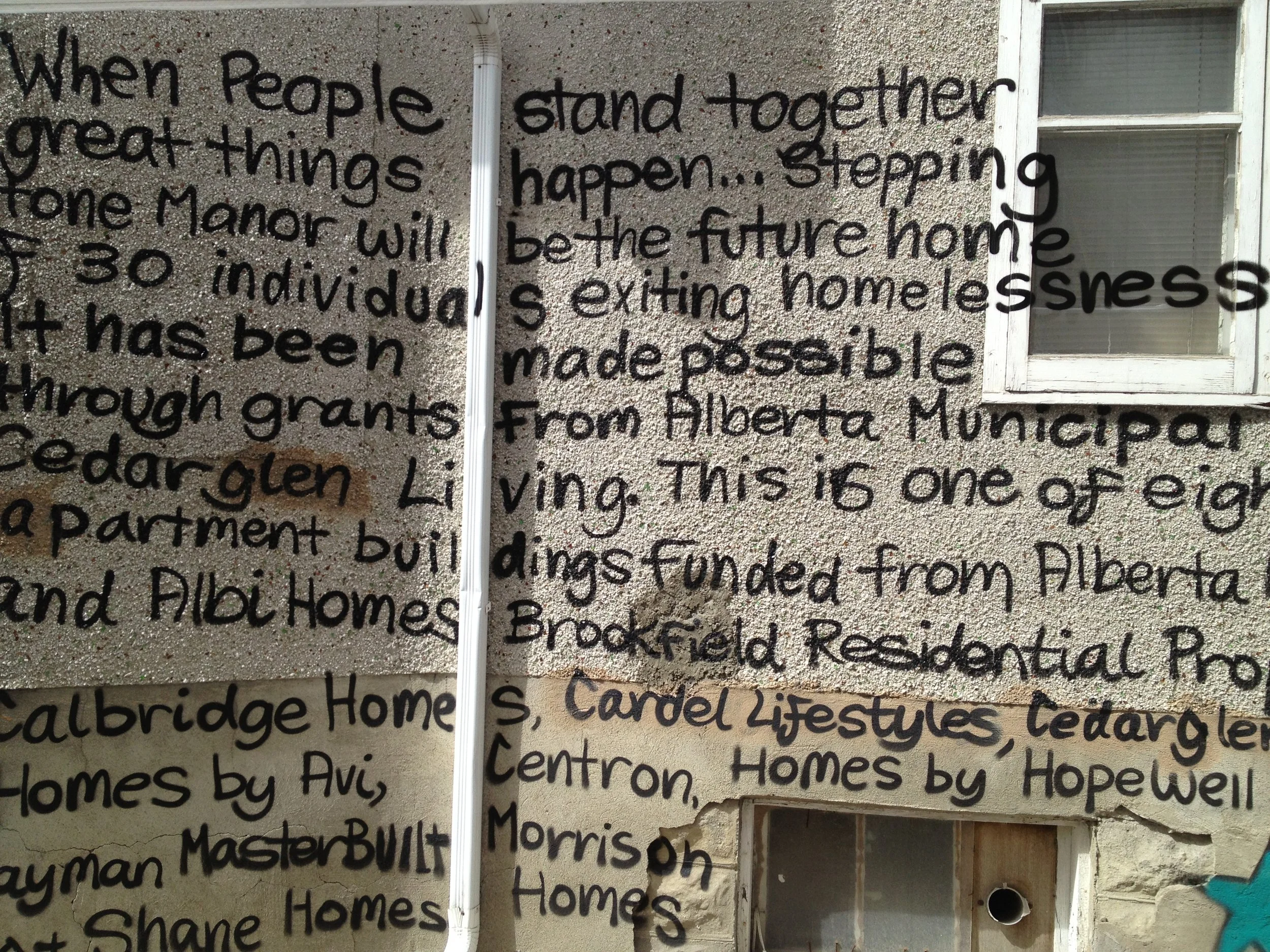
2016HomeSpace Society began our journey as a newly created housing organization with the completion of Aurora on the Park, Stepping Stone Manor, and Providence House, bringing our portfolio to 447 homes across 24 properties. Zooming out during our beginning showed Calgary grappling with the impacts of the oil price collapse, rising unemployment, and record office vacancies. More than 3,200 people were experiencing homelessness, while over 81,000 households were identified as needing affordable housing – highlighting the growing need for stable, affordable homes.
-
 2017
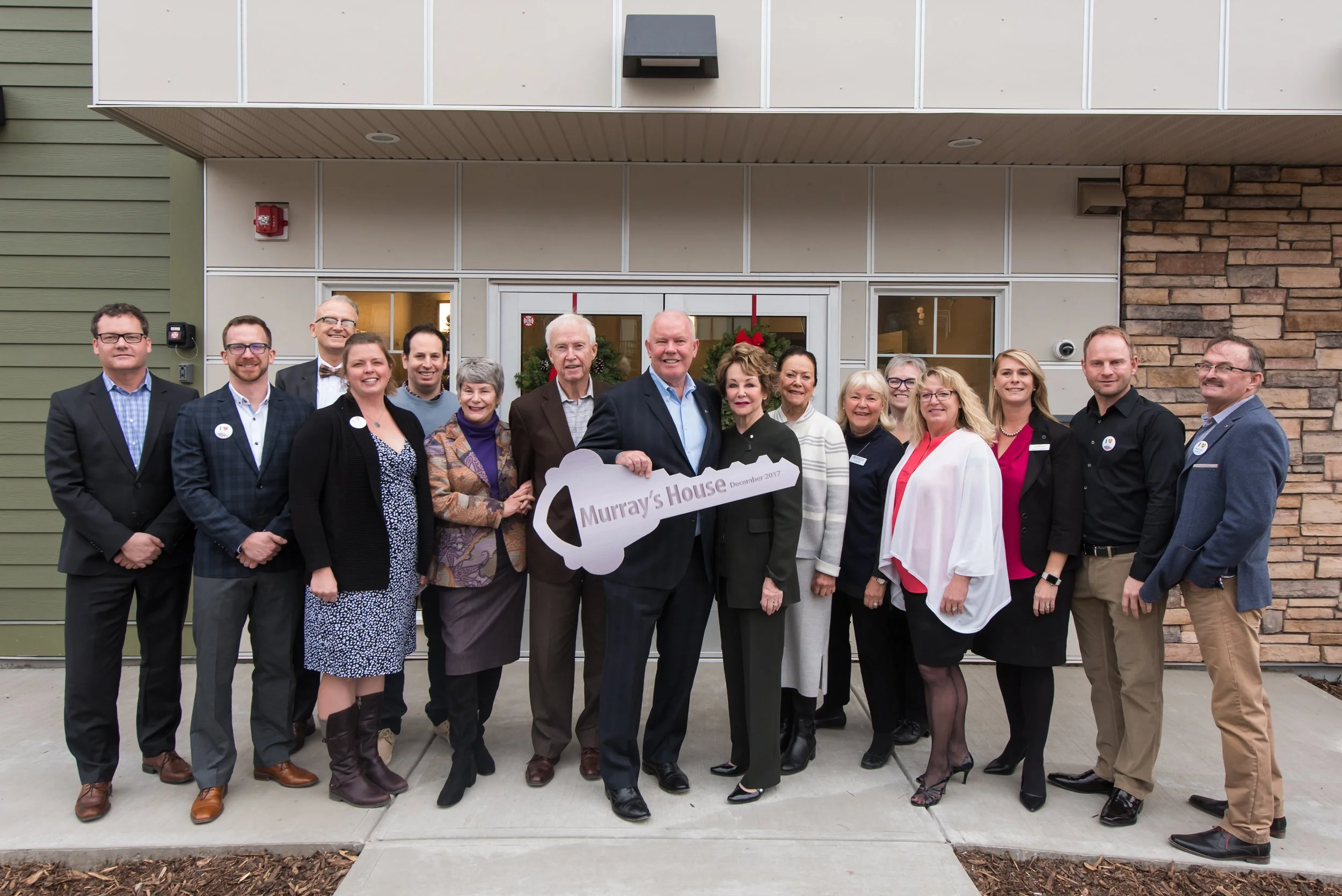
2017With the completion of Murray’s House and Prelude, HomeSpace expanded to 492 homes across 26 properties. Nationally, housing moved higher on the public agenda with the launch of Canada's National Housing Strategy, the first long-term federal housing plan in decades. Meanwhile, Calgary’s economy showed signs of recovery, but housing starts remained subdued and office vacancies stayed high, reflecting a city still finding its footing after a recession.
-
 2018
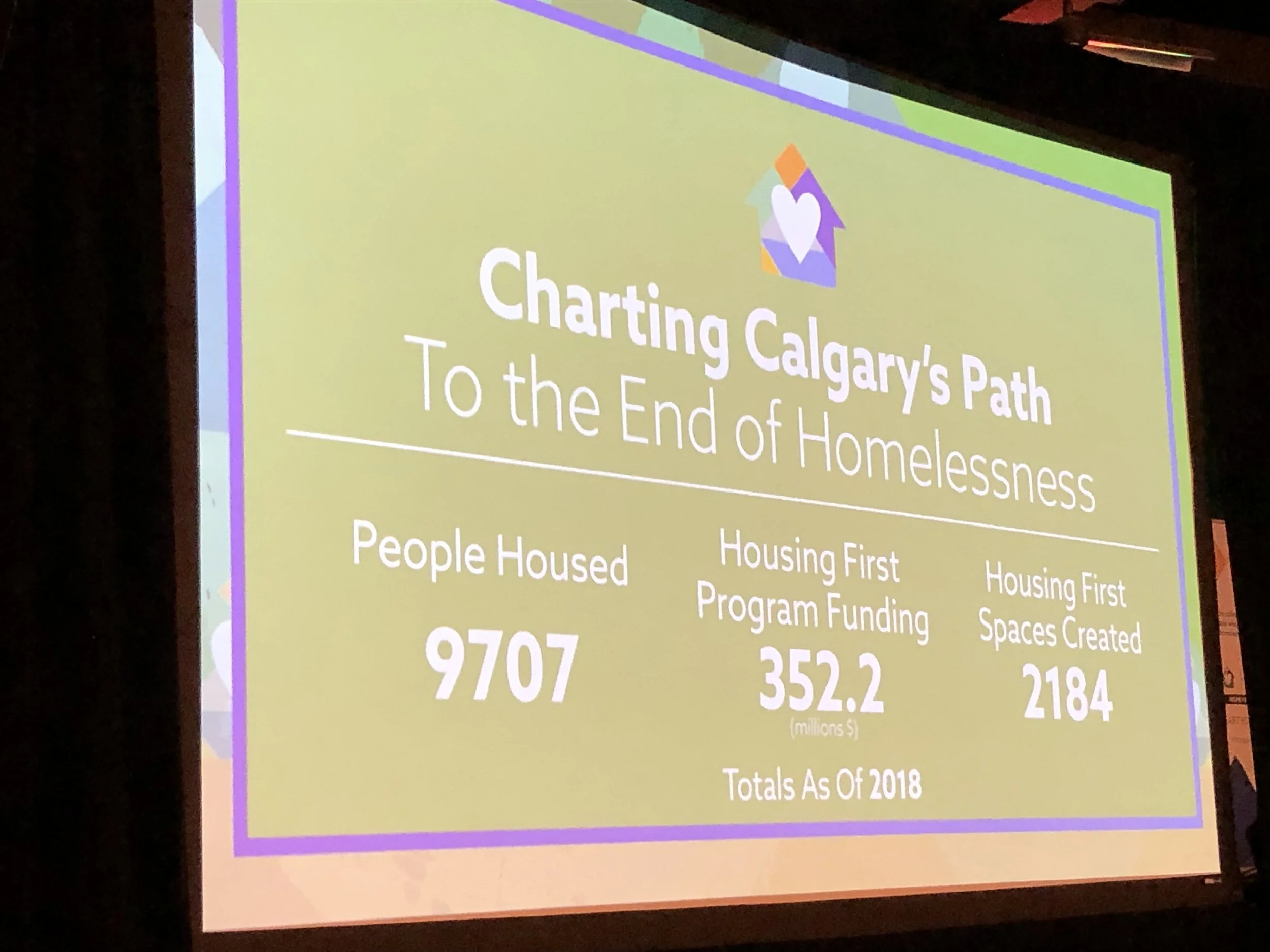
2018The completion of The Maple in Renfrew added another 26 nonmarket homes to Calgary. The city’s Point-in-Time Count recorded a decline in homelessness from 2016, yet housing affordability pressures persisted for many households in part due to stagnant incomes and relatively high unemployment rates. During this time Calgary’s population continued to grow while downtown office vacancies reached 23%, sparking conversations on how existing spaces and future development could help meet evolving housing needs. Although the need was high – there were many groups across the city fighting homelessness, including the former RESOLVE capital campaign which wrapped up in 2018. The challenges of the last several years inspired a strong community response, with organizations across Calgary working to address homelessness. Among them was the former RESOLVE campaign, which concluded in 2018 after raising $74 million to support affordable housing projects throughout the city.
-
 2019
2019HomeSpace opened The Clayton as housing increasingly affordability became a national conversation. The launch of Reaching Home, Canada’s homelessness strategy, and Calgary’s Enough for All 2.0 strategy reinforced a renewed focus on housing and poverty reduction. Despite new housing being built each year, affordable housing remained out of reach for many Calgarians, underscoring the need for sustained investment and coordinated action.
-
 2020
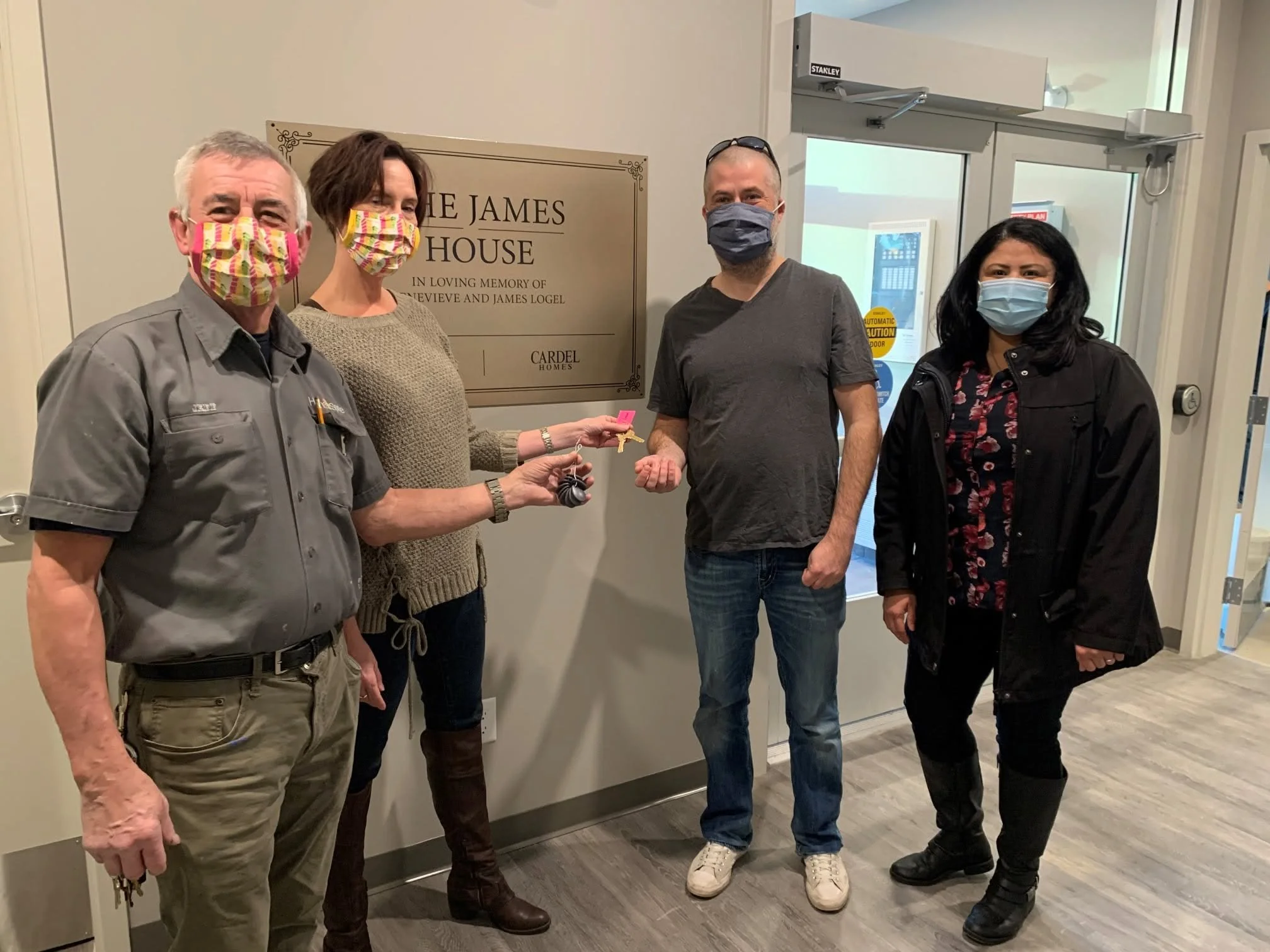
2020The COVID-19 pandemic impacted communities across the world and highlighted the critical role that housing plays in health and wellbeing. HomeSpace partnered with community organizations and governments to operate Calgary’s Assisted Self-Isolation Site, supporting 709 individuals experiencing homelessness. In the midst of this uncertainty, HomeSpace pushed forward and opened the doors to James House in Hillhurst – providing 27 new homes for Calgarians experiencing homelessness. This year put our model to the test and reinforced lessons that would shape housing discussions for years to come: safe housing is essential infrastructure and creating it requires widespread collaboration.
-
 2021
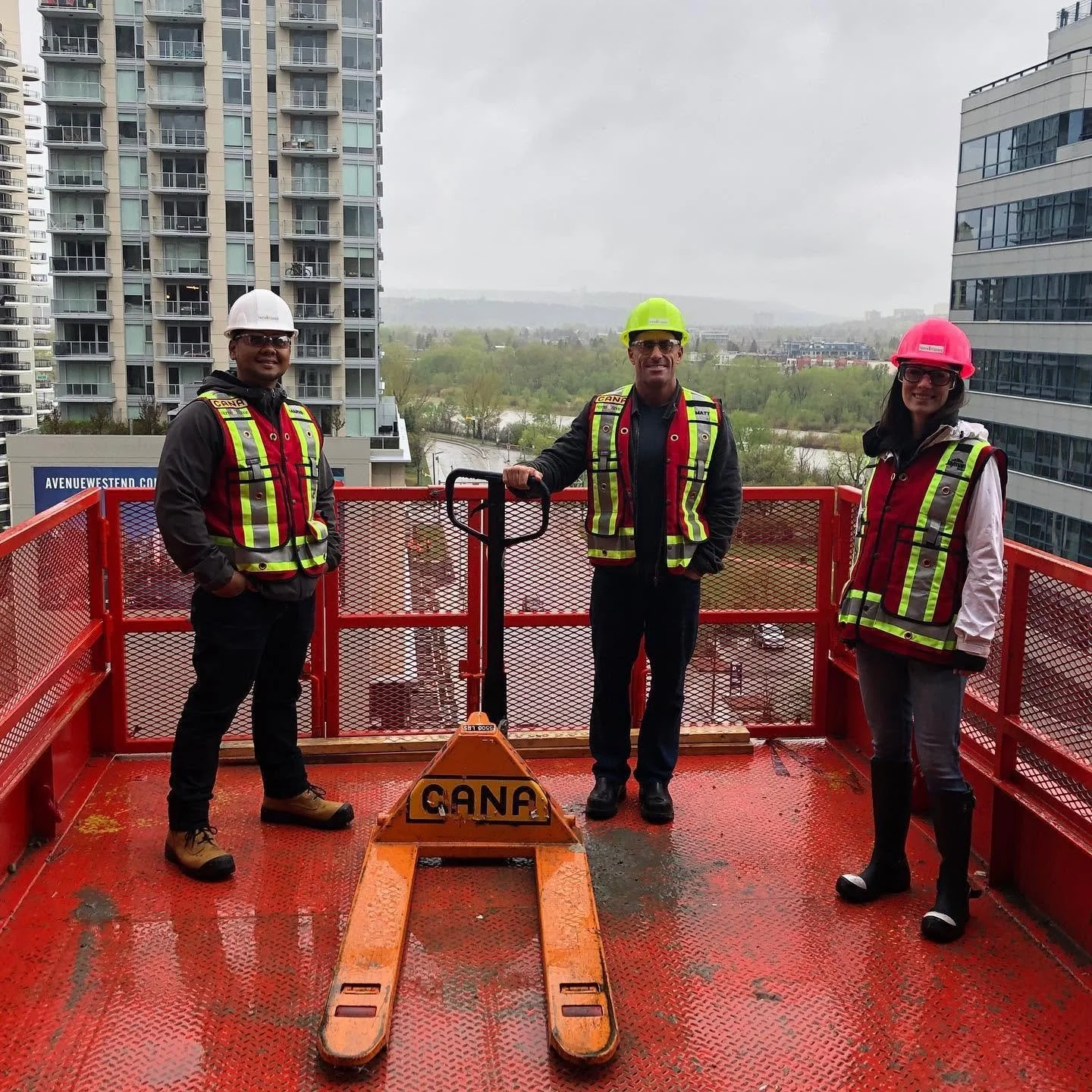
2021As pandemic restrictions began to ease, HomeSpace celebrated the completion of Legacy and Orion – bringing our portfolio to 643 homes in communities across the city. As downtown vacancy reached new highs, Calgary approved the Greater Downtown Plan, a significant step toward addressing record office vacancies and reimagining underused spaces. The Province of Alberta also launched its Stronger Foundations affordable housing strategy to support a sustainable housing system. Despite further investment, COVID-19 hit Calgarians hard – with nearly 50,000 households living in core housing need and more than 114,000 households struggling with unaffordable housing costs.
-
 2022
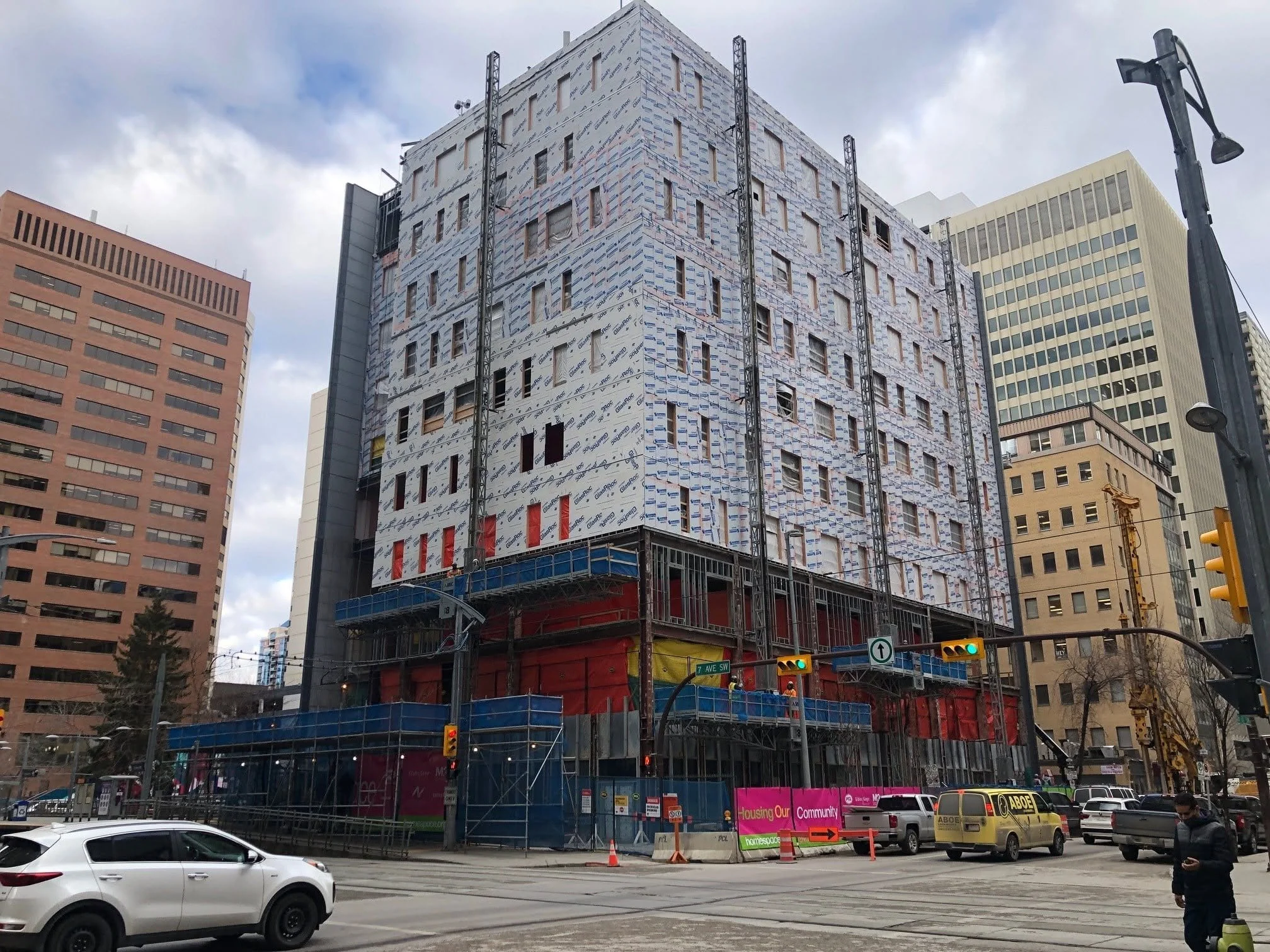
2022This year was one of unprecedented growth for both HomeSpace and Calgary. We open two new buildings: Boreal Place in Forest Lawn, and Neoma – Canada's first office-to-affordable-housing conversion. Meanwhile, the city welcomed more than 42,000 new residents – the largest annual increase in its history. While the 2022 Point-in-Time count reflected another decline in homelessness, rental vacancy rates fell to their lowest level since 2014, signaling mounting pressure in Calgary’s housing market as demand rapidly outpaced supply.
-
 2023
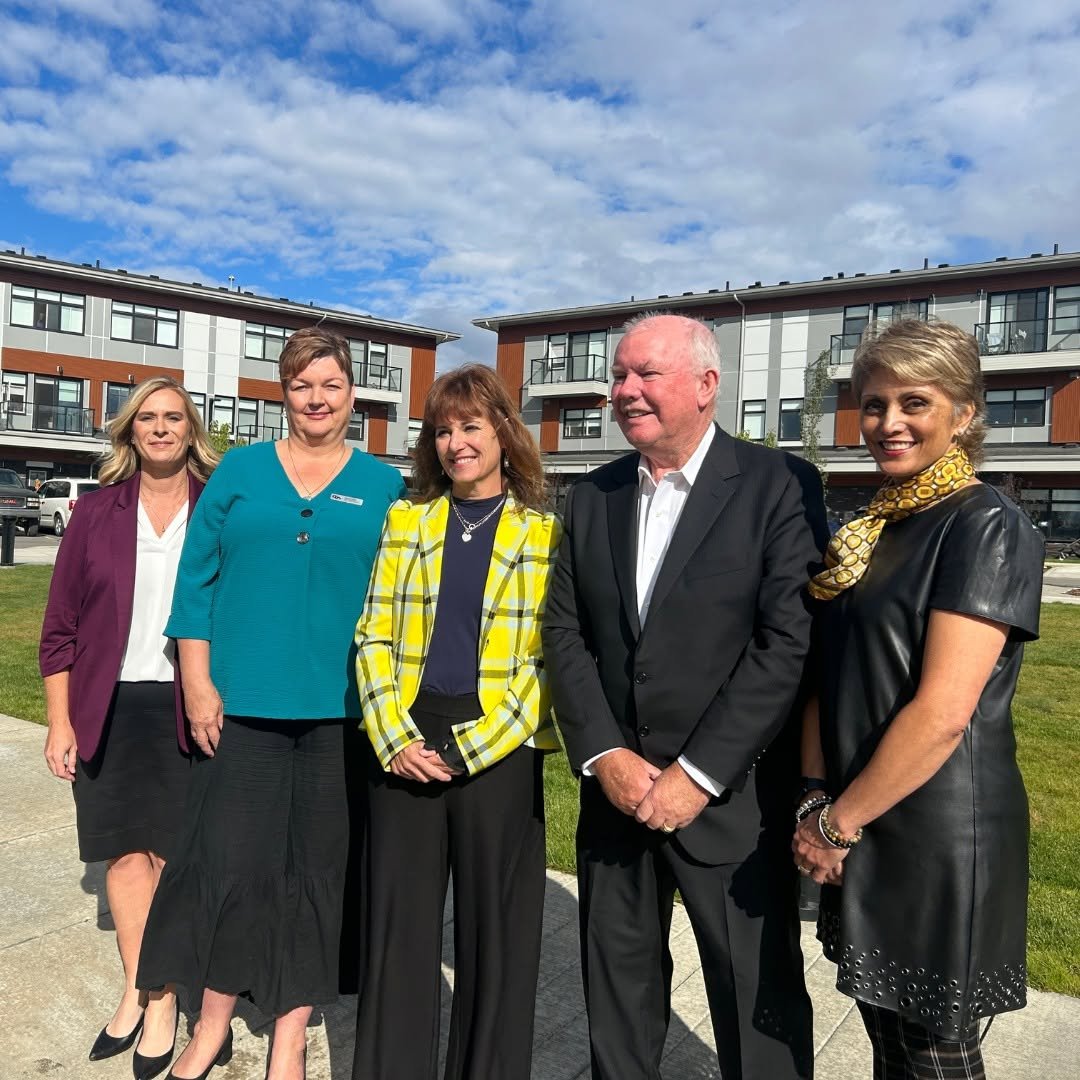
2023The opening of Norris House in Seton coincided with a pivotal milestone for housing policy in Calgary. After consultation and deliberation, City Council passed Home is Here, Calgary’s Housing Strategy. A portion of this strategy is supported by the new created federal Housing Accelerator Fund. These moves were motivated by lack of housing diversity, high costs to develop, and discrimination in the rental market. At the same time, research showed a significant decline in affordable rental housing over the previous three decades, and Calgary recorded one of the lowest rental vacancy rates in the country, bringing housing affordability into sharper focus than ever before.
-
 2024
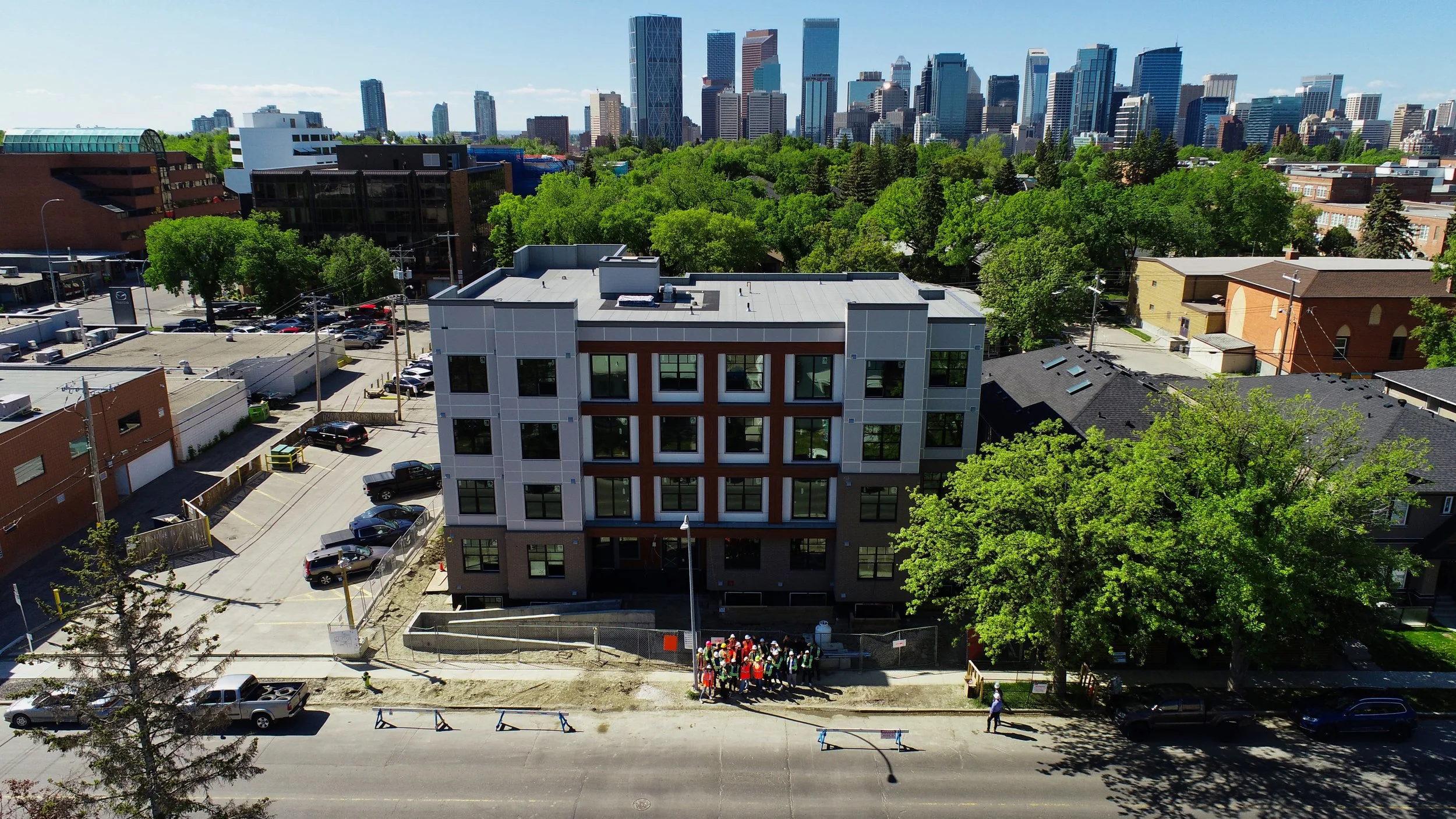
2024Hope Heights opened as Calgary recorded more than 20,000 housing starts. Despite increased levels of housing development, affordability pressures continued to grow. Calgary's population surpassed 1.57 million residents in 2024, driven in part by strong migration and immigration. As the city welcomed more newcomers, the proportion of individuals experiencing homelessness who held some form of immigration status increased by 6%, while income challenges remained the leading cause of housing loss. The city's historic public hearing on citywide rezoning also reflected the growing public attention and urgency surrounding housing solutions.
-
 2025
2025As Calgary’s population exceeded 1.6 million people, housing development reached record levels with more than 23,000 housing starts, yet homelessness also reached its highest Point-in-Time Count in a decade. Shifts is government at the municipal and federal levels created both uncertainty and opportunity for further investment in housing. To close out the year, the Calgary Food Bank opened their satellite location in Neoma’s ground floor commercial space. This partnership expanded our model and improved service delivery to Calgary’s downtown core.
-
 2026
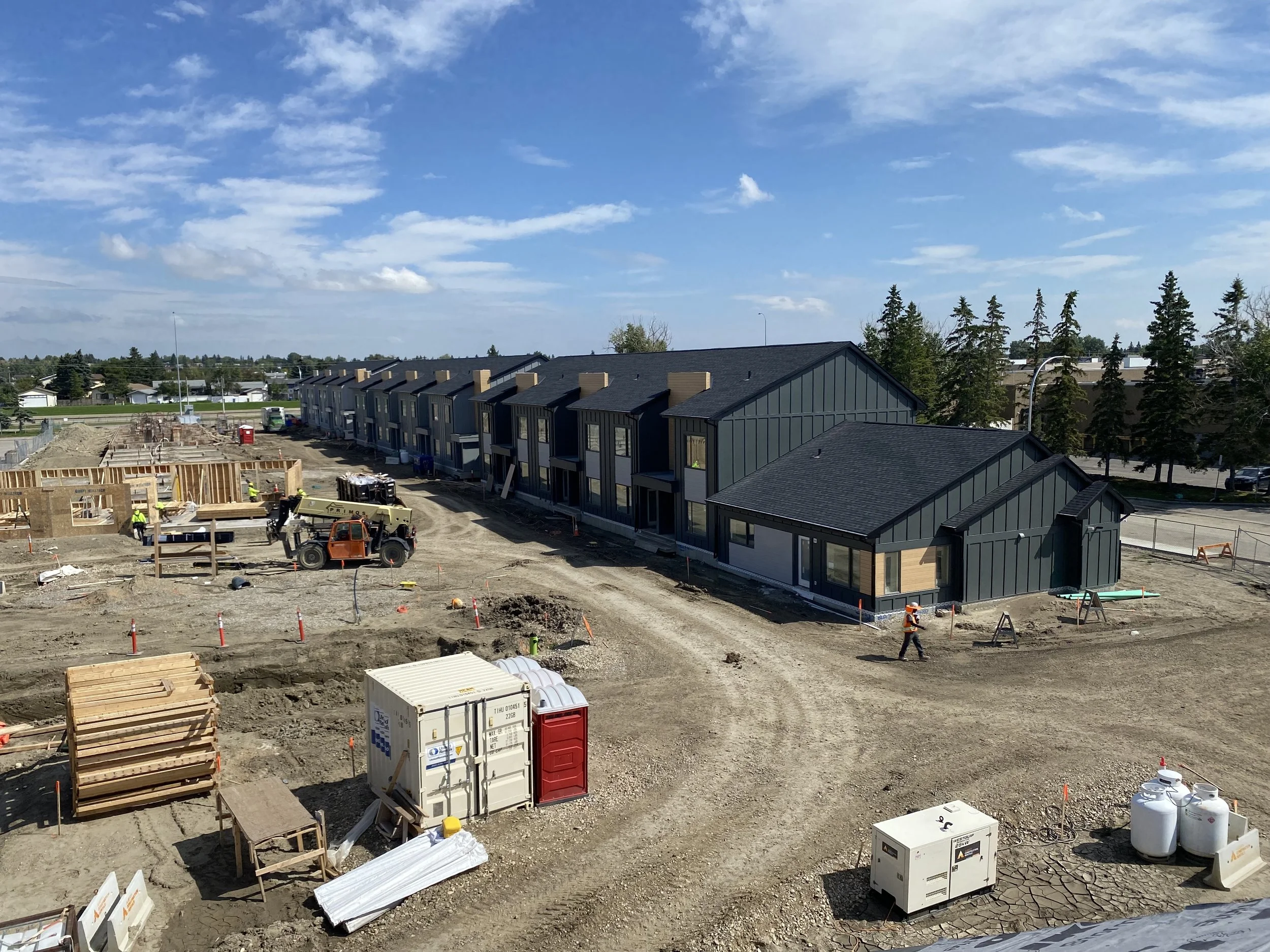
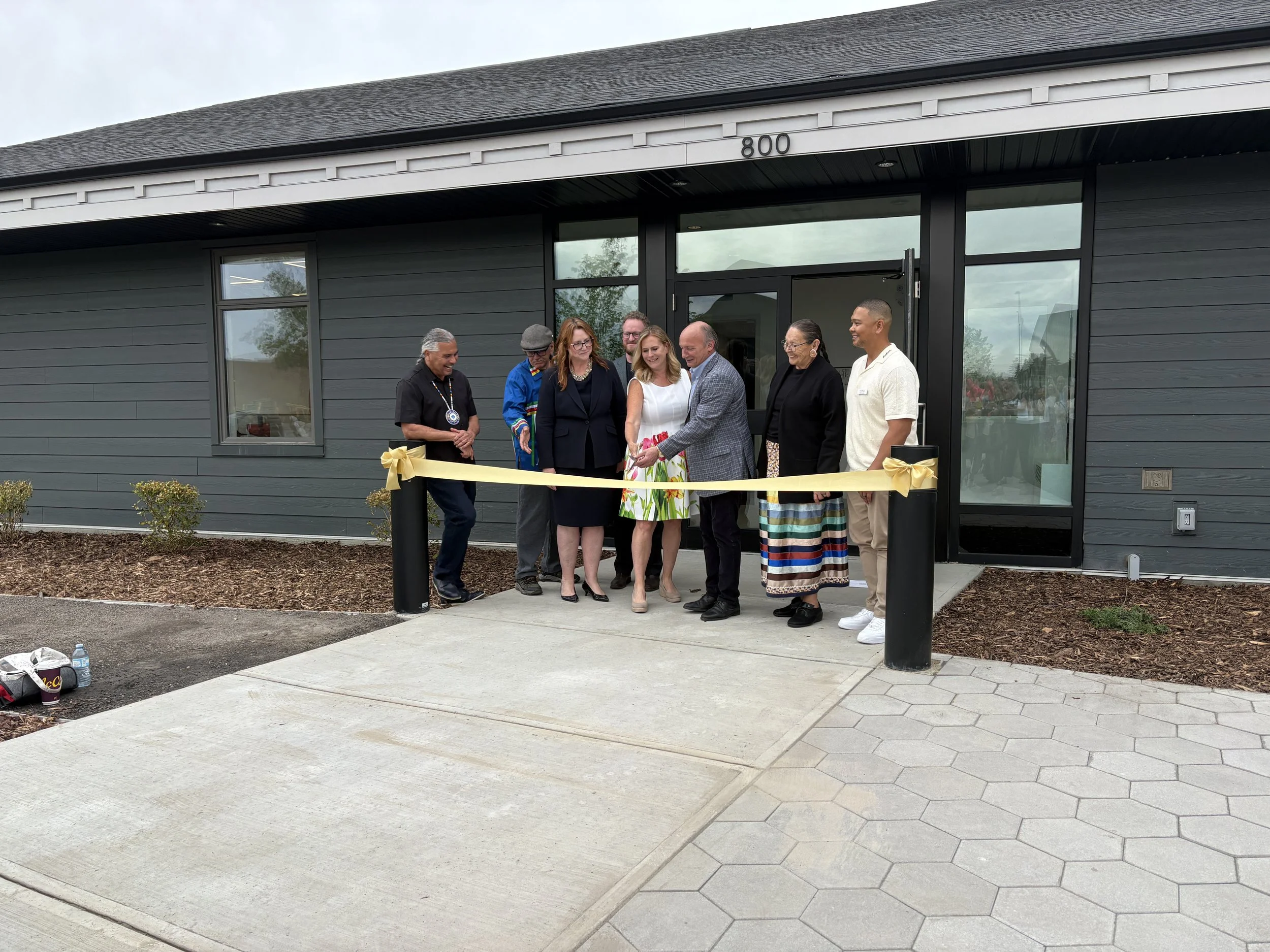
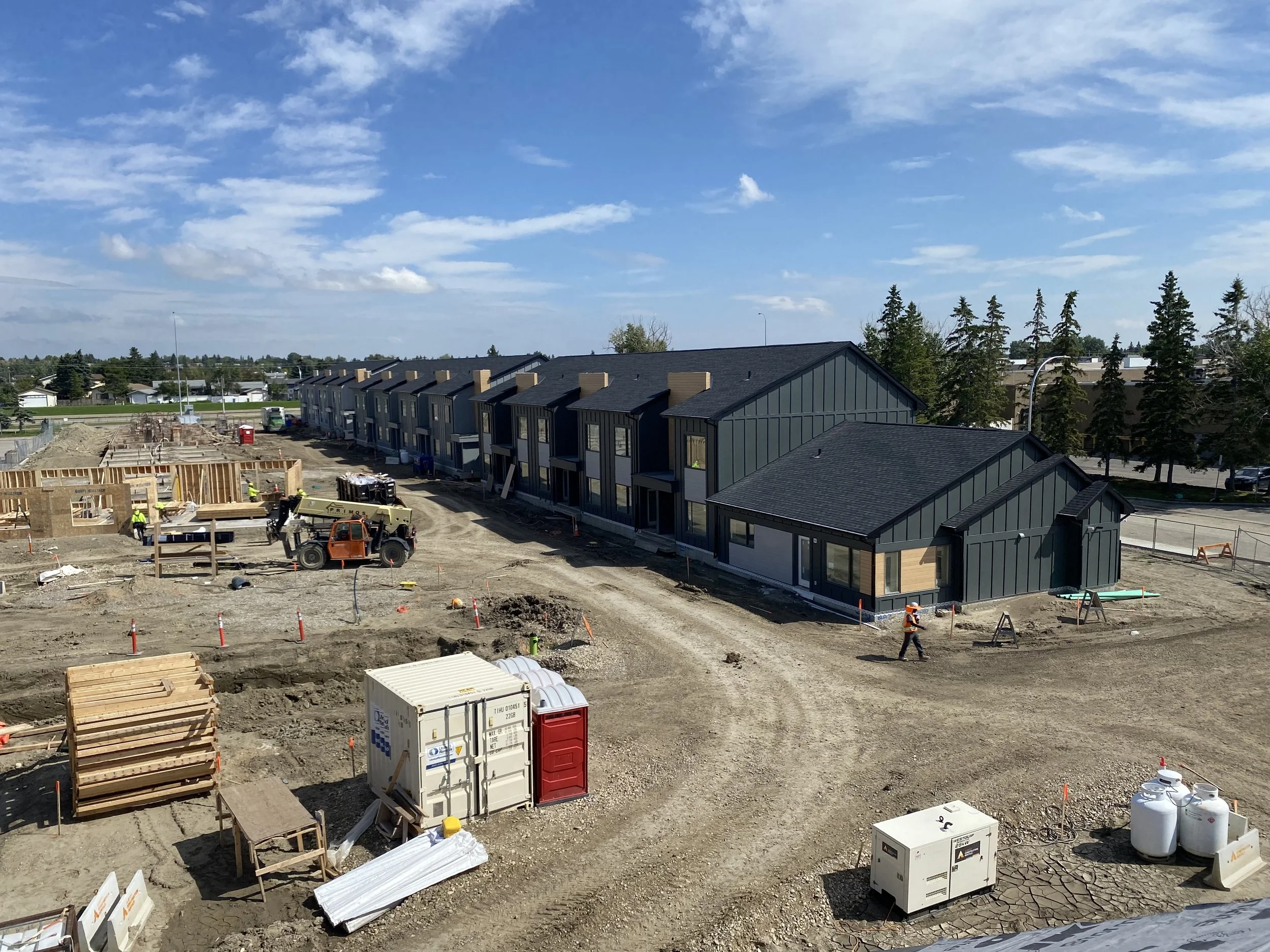
2026The completion of 52 townhomes in Whitehorn marked another milestone for HomeSpace – bringing our portfolio to near 1000 homes in all four quadrants of the city. The beginning of 2026 promised new opportunities through office-to-residential conversion programs and additional funding for non-market housing. At the same time, the housing policy landscape continues to evolve, with ongoing debate about the best ways to increase housing supply and improve affordability across the city.
In our 10th year as HomeSpace, non-market housing has solidified itself as a civic priority, and we are determined to work alongside government and the community to build a Calgary where everyone has a place to call home.
New Developments
-
Whitehorn Family Townhomes
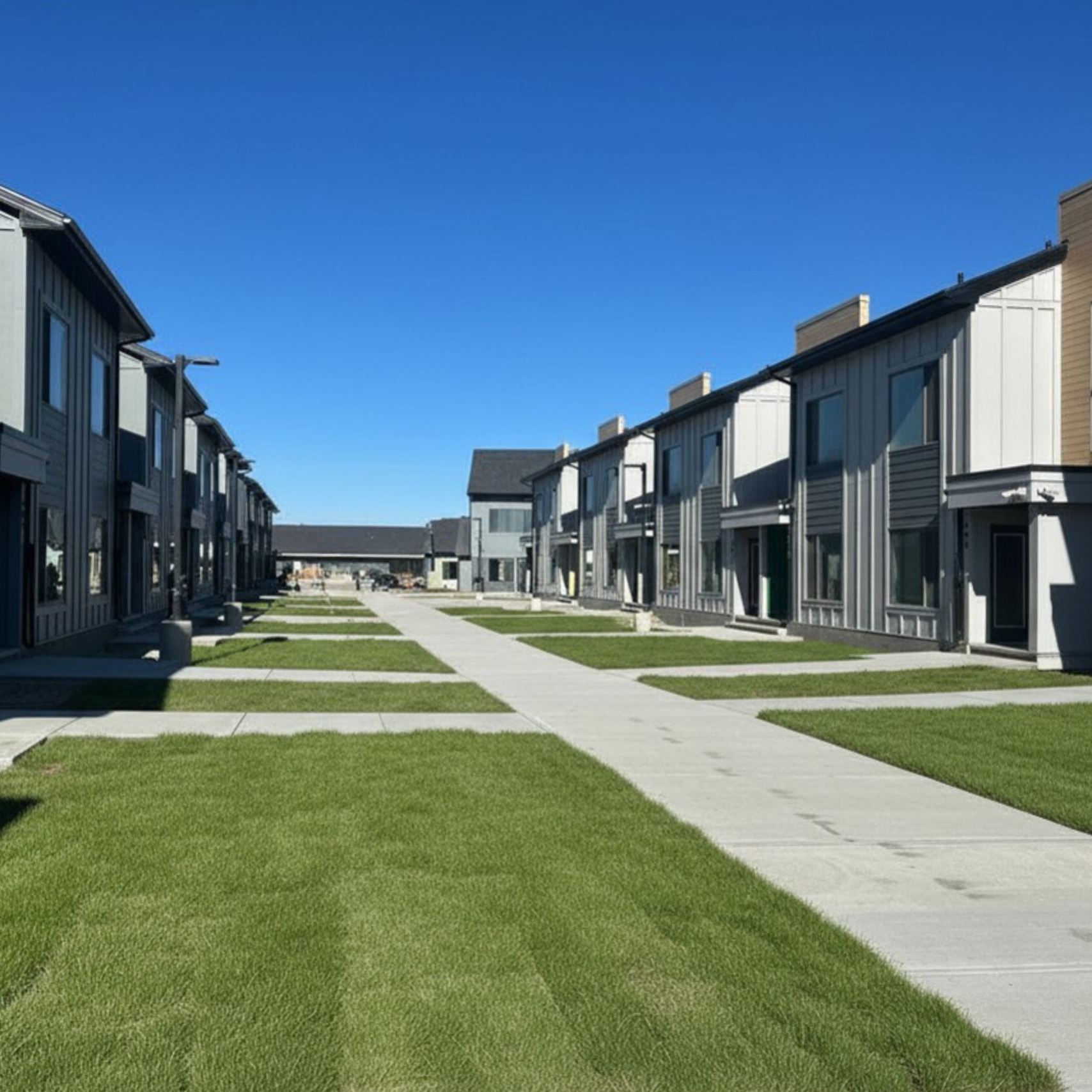
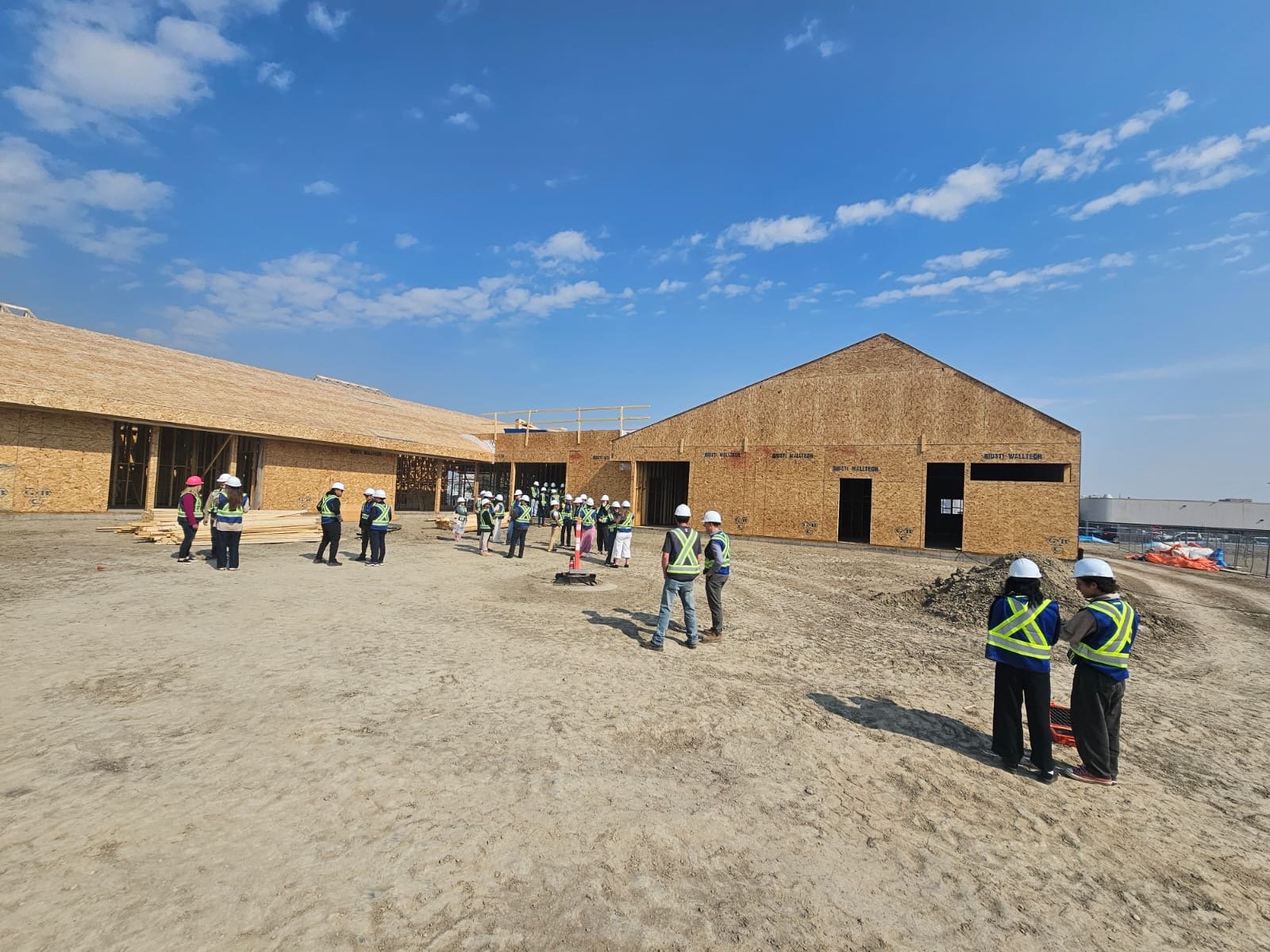
May 29th, 2026 HomeSpace opened 52 transitional family townhomes in the north-east community of Whitehorn. These 2 and 3-bedroom homes are designed to support families in bridging the critical gap between homelessness and more permanent housing, with a particular focus on Indigenous and newcomer families. While living here, residents will learn the housing skills needed to succeed in long-term affordable housing programs or market housing.
Social supports, referrals, and income testing are provided by our partner agencies Inn from the Cold and Miskanawah.
-
Evergreen Family Townhomes
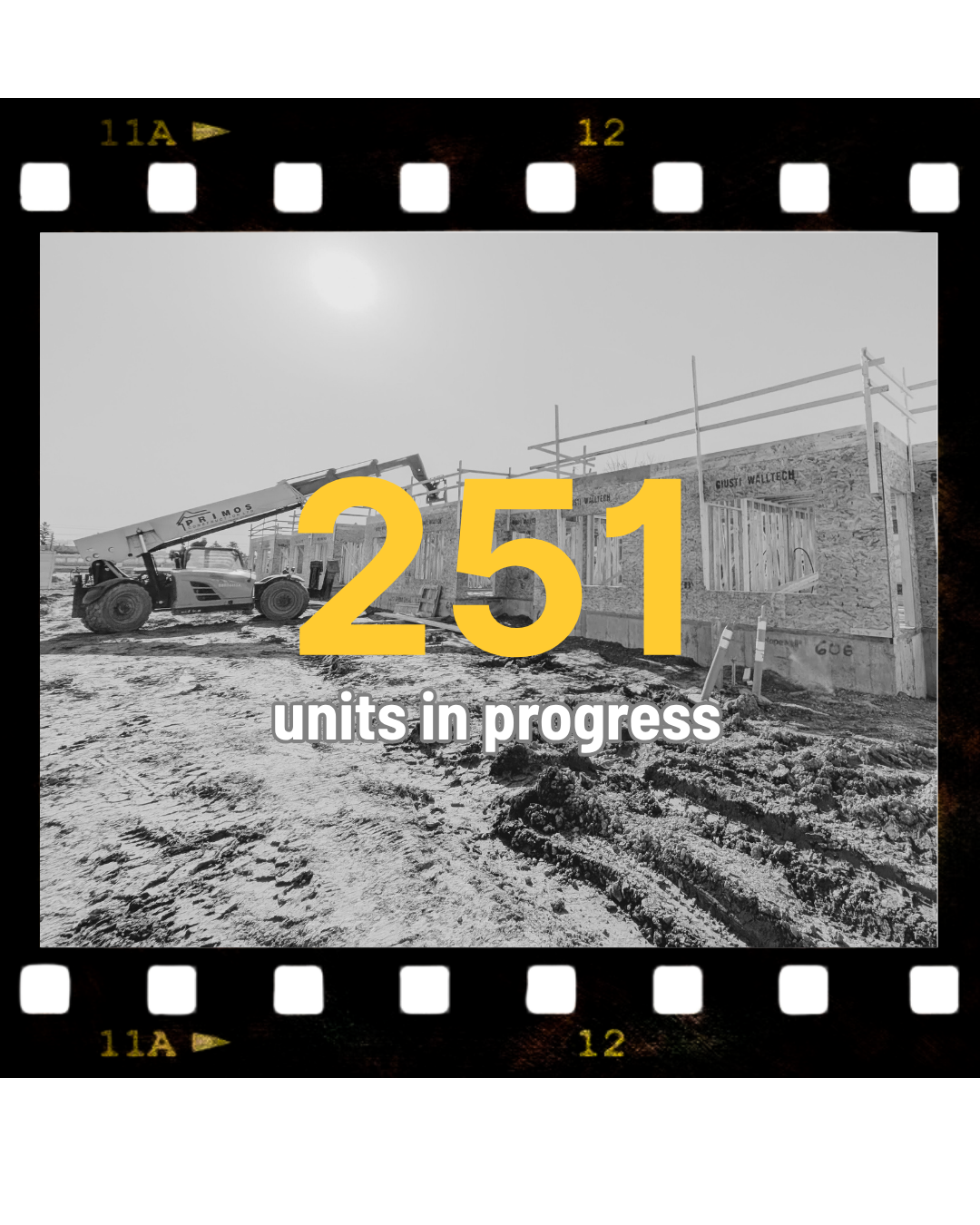
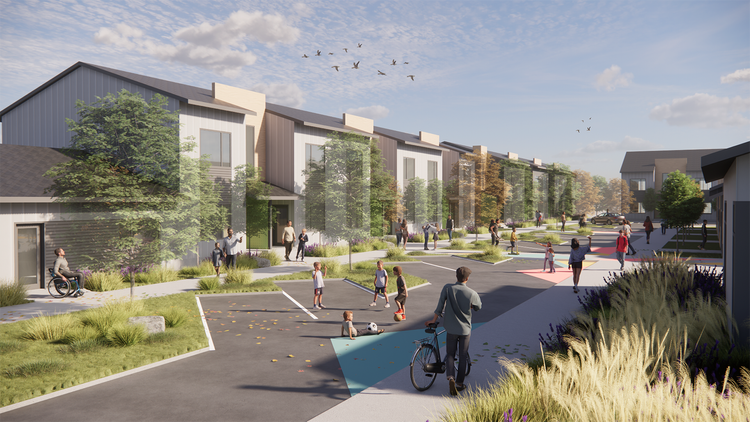
Building on the success of the Whitehorn project, HomeSpace will soon break ground on a second transitional townhome project for families at risk of or experiencing homelessness. We plan to develop 45-two-and-three-bedroom townhomes in the south-west community of Evergreen.
This project is thoughtfully designed to create family-oriented spaces that combine residential and community areas to encourage interaction among residents and the broader community. After completing initial planning, we’re set to break ground in the summer of 2026.
As we near the completion of the project, HomeSpace will partner with a social service agency who provide supports for our residents including income testing, referrals, and social supports.
-
1000 8th Ave Office Conversion
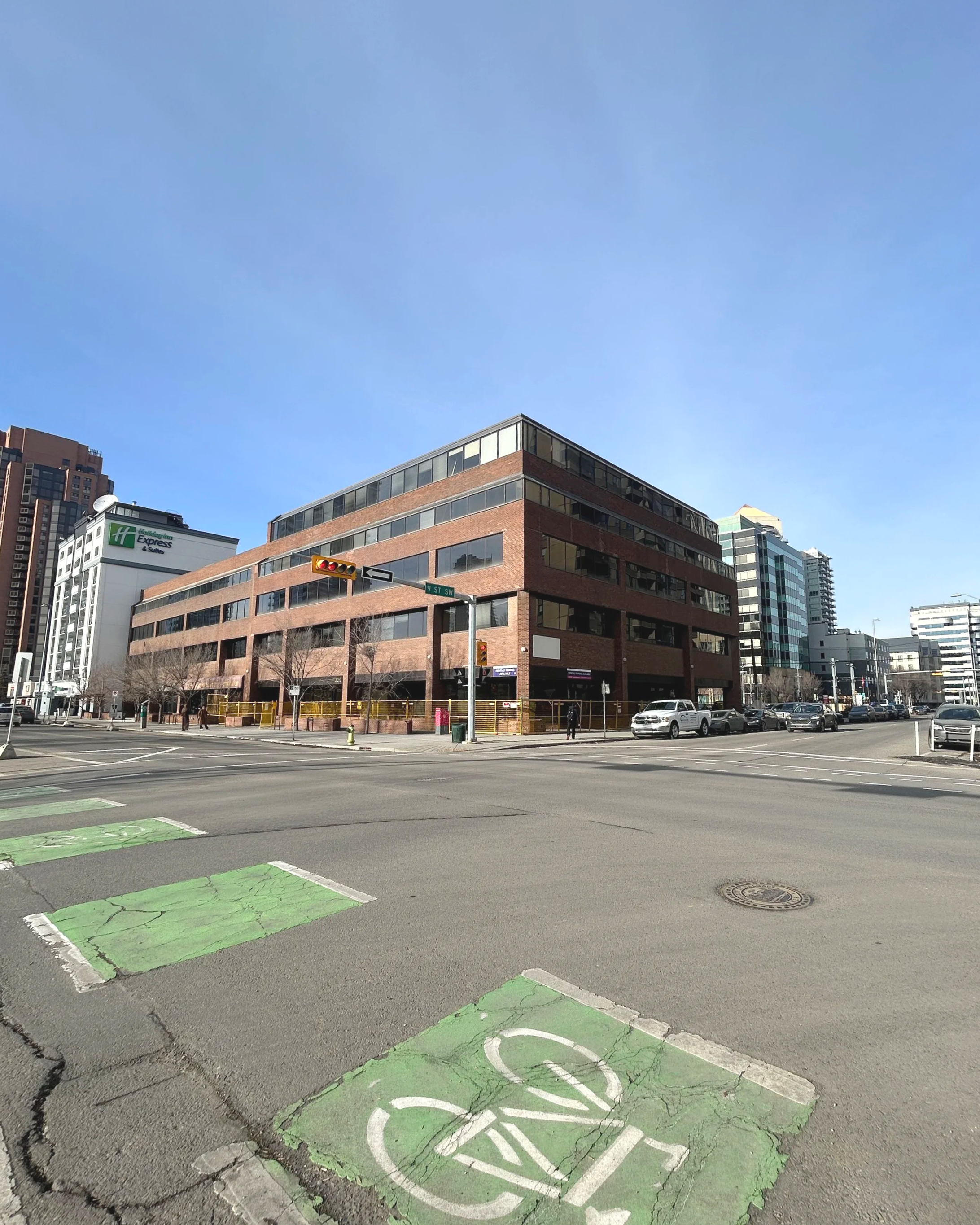
HomeSpace is converting a second underused downtown office building into affordable housing, adding 65 new non-market homes in Calgary’s city centre.
The former office building – located at 1000 8th Ave – will be transformed into a mix of studio and one-bedroom homes for single adults, helping address the high demand for deeply affordable housing while supporting downtown revitalization.
We are currently in the design phase and intend to begin interior demolition late 2026.
-
Meridian Permanent Supportive Housing
There is an urgent need for more specialized housing for those who have experienced prolonged housing instability and who require specialized medical and social supports maintain housing.
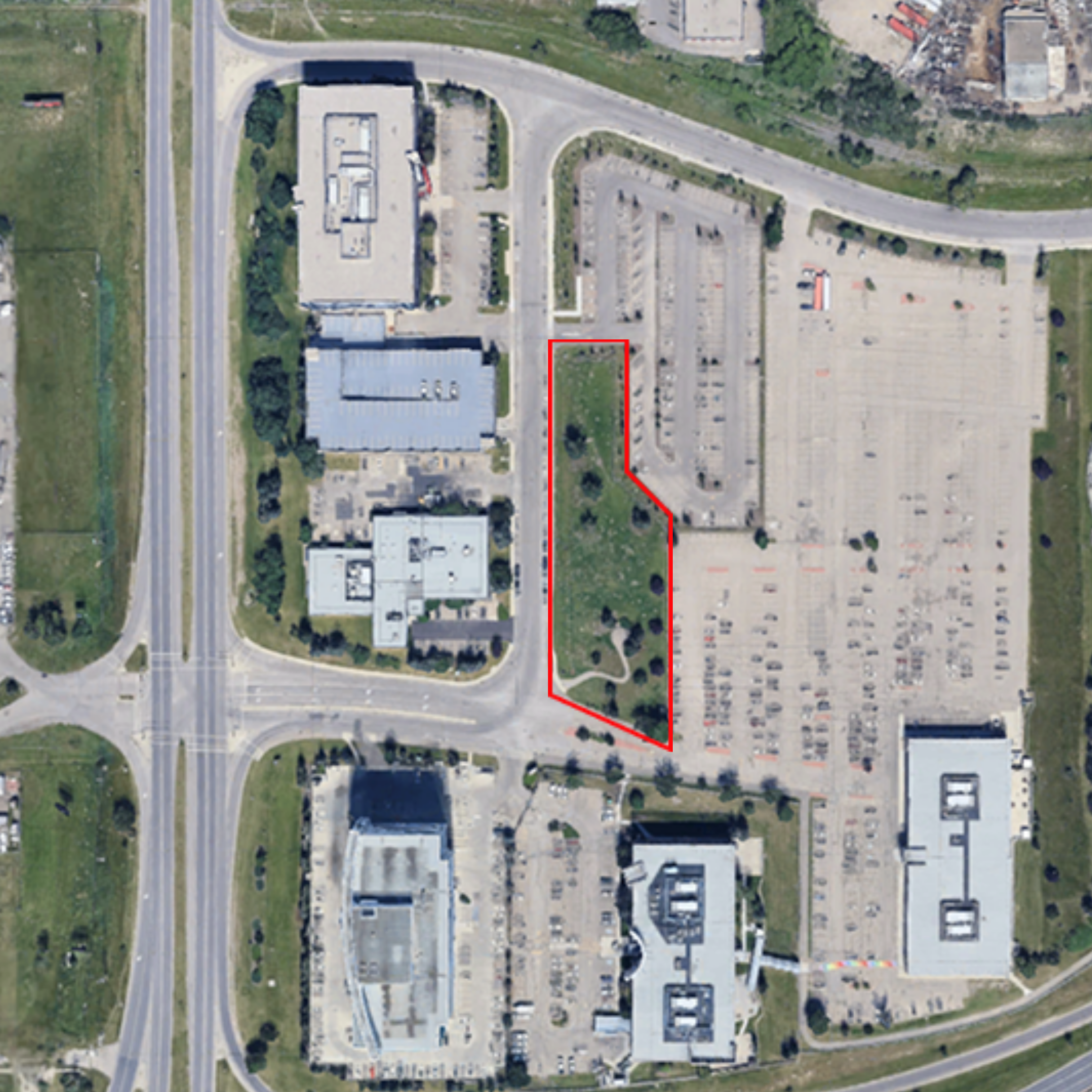
In recognition of this gap, we are in the early stages of developing 56 units of permanent supportive housing with 24/7 on-site supports. These homes will be designed with privacy and dignity, including private rooms with communal living spaces, amenity areas, and accessible designs to accommodate mobility needs.
As we near the completion of the project, HomeSpace will partner with healthcare providers and a social service agency to supports these residents as they transition out of chronic homelessness.

Our Residents
Our residents are at the heart of everything we do. Behind each number in these statistics is a person with a story – a senior who can now age with dignity, a single parent building a better future for their children, or someone rebuilding their life after experiencing homelessness. These are not just figures; they represent the real lives, hopes, and journeys of the people we serve. At HomeSpace, we firmly believe that each individual deserves to feel safe, respected, and comfortable in their home. These numbers reflect the tangible impact of our work and remind to keep building, advocating, and supporting.
HomeSpace Residents by Age
HomeSpace Residents Receiving Income Supports
HomeSpace Residents by Gender
HomeSpace Residents with a Mental Health Condition
HomeSpace Residents with a Physical Health Condition
HomeSpace Residents by Ethnicity

Lorraine
When Lorraine, her partner and teenage grandson moved from Saskatchewan to Calgary they were taken aback by the skyrocketing rent prices and limited available rentals. Unable to secure a home they could afford, the family found themselves scattered between emergency shelters until a unit became available for them with HomeSpace.
Since then, with the help of onsite support workers, the family has stabilized.
Her grandson is finishing high school, and Lorraine especially loves the community functions and cultural events hosted onsite at her building. She says the family makes use of the community pantry when provisions are running low and that the location of her home near her grandson’s school, local amenities, and onsite supports have changed the trajectory of their lives.
As the family prepares to move on to market housing, Lorraine has plans to give back to the community through volunteering and hopes to build a community like the one they found with HomeSpace.
Evelyn
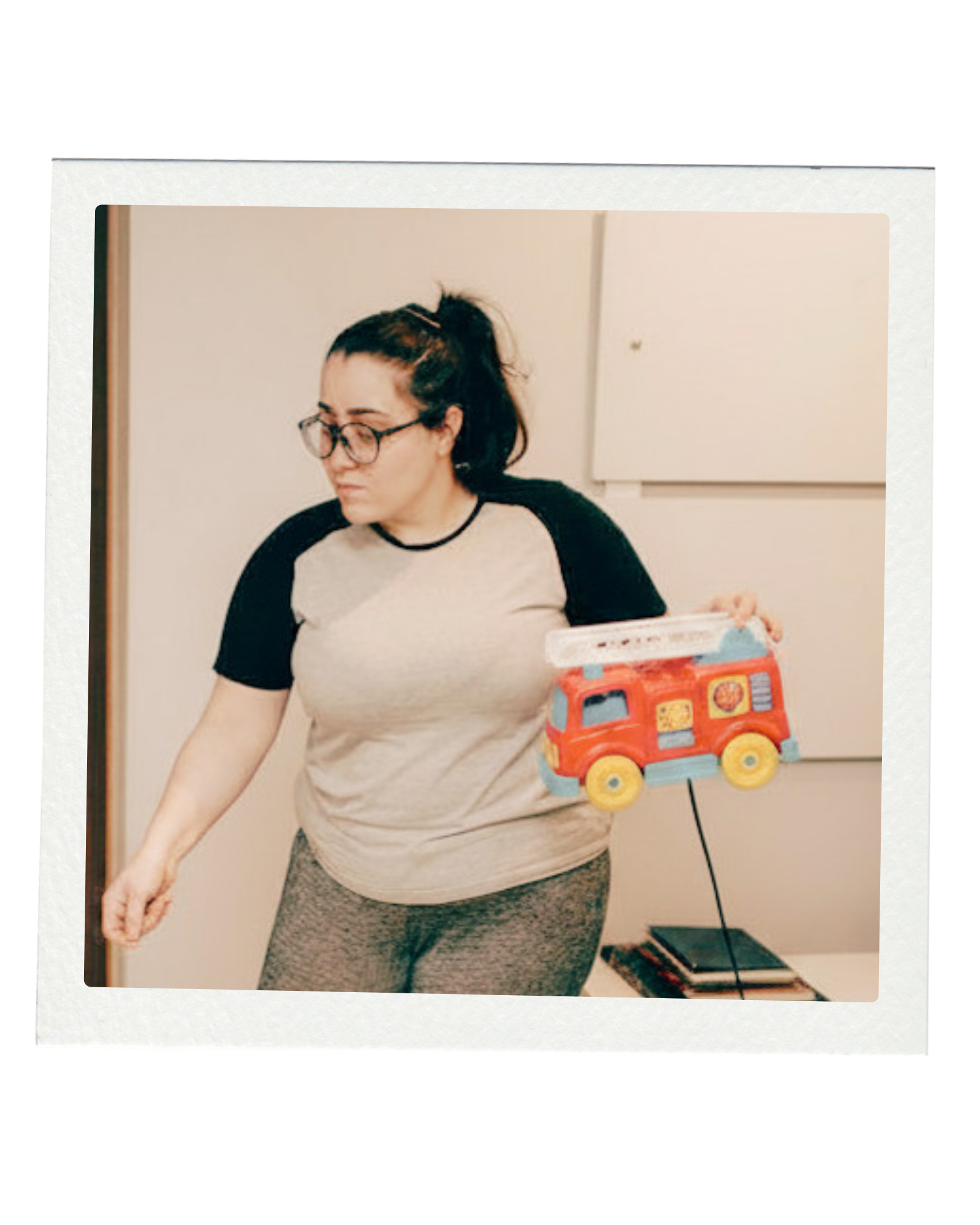
Evelyn and her young daughter came to live in a HomeSpace building after facing a tumultuous job market that left them unable to pay rent.
Finding safe, affordable housing for herself and her young child was incredibly difficult. With limited housing options and an uncertain income, Evelyn found herself at risk of homelessness. Through a local support program, she was placed on a waitlist for affordable housing and finally connected with HomeSpace.
Today, and her daughter no longer live with the constant fear of losing their home. Her daughter has been able to go to the same daycare without constant interruption – helping their family put down roots and building community.
“For the first time in years we have a place we can truly call home.”
With stable housing in place and her daughter well supported, Evelyn can now focus on her health, continue and look for work without the overwhelming stress of housing insecurity.
“What I like most is the sense of community and respect. The building is clean, its safe, and the neighbours are quiet....I don’t feel judged for my past situation.”
Looking ahead, Evelyn hopes to finish her studies and save enough money to get a bigger house for when her family grows. One day, she would like to use her own experience to support other families facing the same challenges she once did.

Delilah
For Delilah, home means security, community, and peace of mind.
Today, Delilah feels settled in her HomeSpace home. She knows her neighbours, is connected to her community, and can easily access everything she needs. But this stability came after years of experiencing housing insecurity.
Twelve years ago, Delilah and her husband, Tom, found themselves with nowhere to go after being repeatedly priced out of their rentals. Moving from one home to another had become exhausting, and they longed for a place they could truly settle into. With the help of a friend who took them in and connected them to affordable housing, they were able to move into their HomeSpace home just in time for their 38th wedding anniversary.
“I said at the time how very tired I was of never having stable, secure, and affordable housing.”
For more than a decade, Delilah and Tom built a life together in the same home. Then, after a courageous battle with cancer, Tom passed away.
Now 70 years old, Delilah is navigating the loss of her partner of 50 years. In the midst of her grief, she is grateful for the stability of affordable housing. Knowing she can always afford her rent allows her to focus on healing and adjusting to life on her own, without the added fear of losing her home.
“Living here—in this building—has enriched my husband’s and my life immeasurably.”
As she looks ahead, Delilah is grateful for the comfort of a home she can rely on. She looks forward to spending the years ahead surrounded by the community she has built, with the stability, peace, and dignity that everyone deserves.

Dave
Just a short while ago, Dave was living in his truck after losing both his job and his home at once. Unable to afford rising rents, he spent time couch surfing but found himself in environments that didn't support the life he wanted to build.
“Poverty,” he said simply when asked how he came to need affordable housing.
Today, having an affordable place to call home has given him the foundation he needs to move forward. While rebuilding his life has not been easy, stable housing has made it possible to focus on finding work, improving his circumstances, and planning for the future.
“[This home] represents stability,” he says. “It helps me improve my lifestyle.”
What he values most is the combination of affordability and support. “Low rent and help when I’m trying to get back up.”
-
“We can finally focus on something other than a home. It is so nice for my kids to have stability”
—HomeSpace Resident
-
"It got me off the streets. Gave me some self-respect back."
—HomeSpace Resident
-
“Everything we need is around us within walking distance, and we do feel really safe here”
—HomeSpace Resident
-
“Our main sidewalk needs to improve, our front yard can use some improvements.”
—HomeSpace Resident
-
“It’s so awesome here, we all love it so much, we don’t want to leave.”
—HomeSpace Resident
-
“Sometimes when people are cooking, smoke builds up easily and the fire alarm calls.”
—HomeSpace Resident

Our Agency Partners
At HomeSpace, we approach affordable housing a little bit differently. We partner with organizations who have the expertise to ensure that everyone living in a HomeSpace building is set up for success. The homes we provide offer more than just shelter, residents have on-site access to social supports. This model is highly impactful as it allows us to dedicate all our resources to supplying and maintaining high-quality housing, while our partners focus on providing wrap-around care.
In the 2025-26 year, we brought on two new partners bringing our total to 20 different agencies who serve diverse needs in our community.
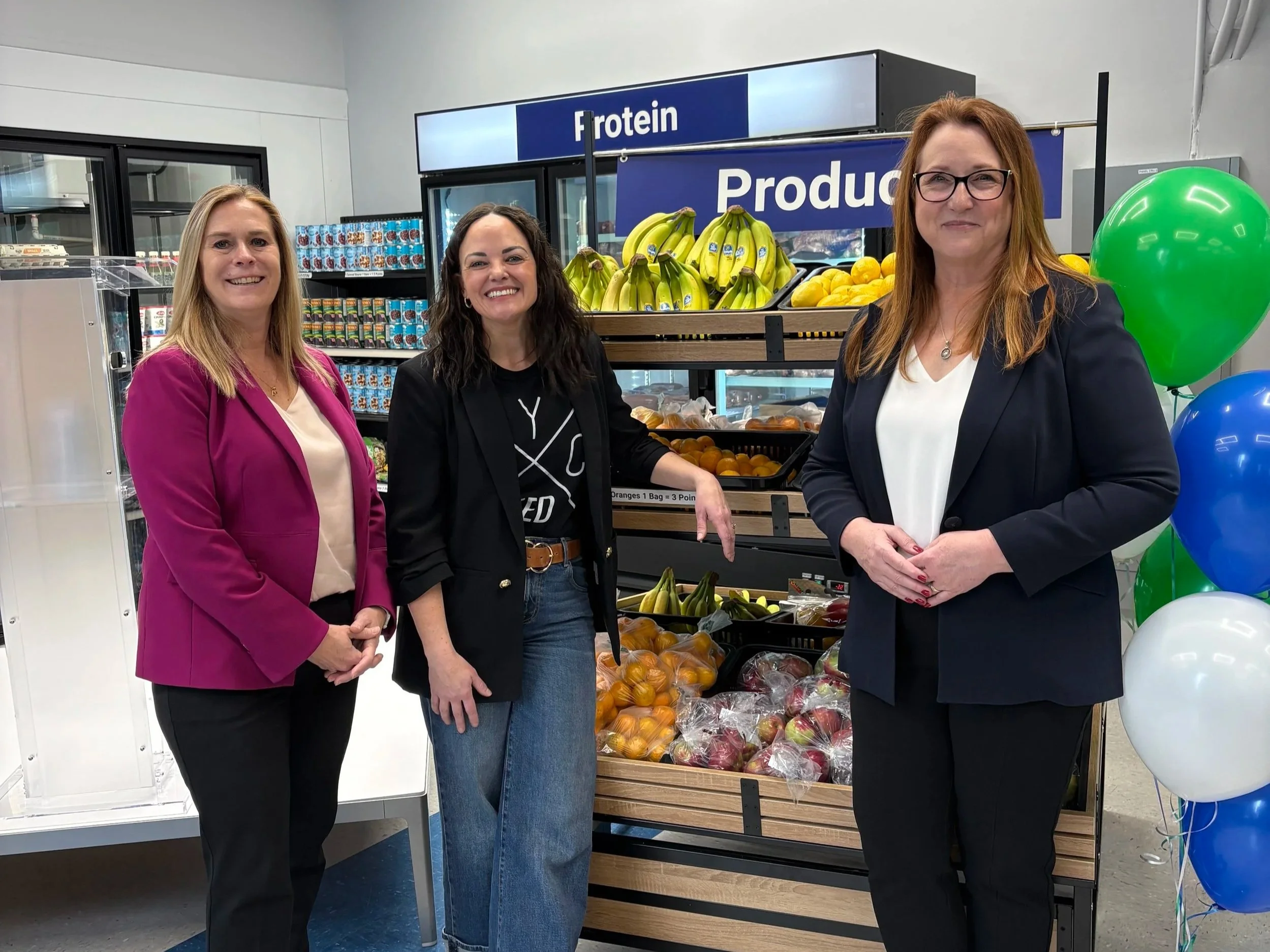
The Calgary Food Bank opened their first satellite location in December of 2025 in Neoma’s ground-floor commercial space. From the beginning, we knew that whoever occupied this space would strengthen the work already being done here and we couldn’t be happier about this partnership.
As of spring 2026, Miskanawah now provides culturally grounded programs and services to our residents at Whitehorn. This is HomeSpace’s first partnership of this kind and we are looking forward to learning with Miskanawah as they build stability and connection for our residents.

Number of HomeSpace units by agency partner
There has always been a willingness to work together to support residents and minimize barriers where possible, with flexibility and understanding around external factors when needed. We look forward to continuing to work together to provide safe and accessible housing.
— Agency Partner

Our Champions
Thank you to our champions.
Our work would not be possible without our community of partners, donors, and volunteers.
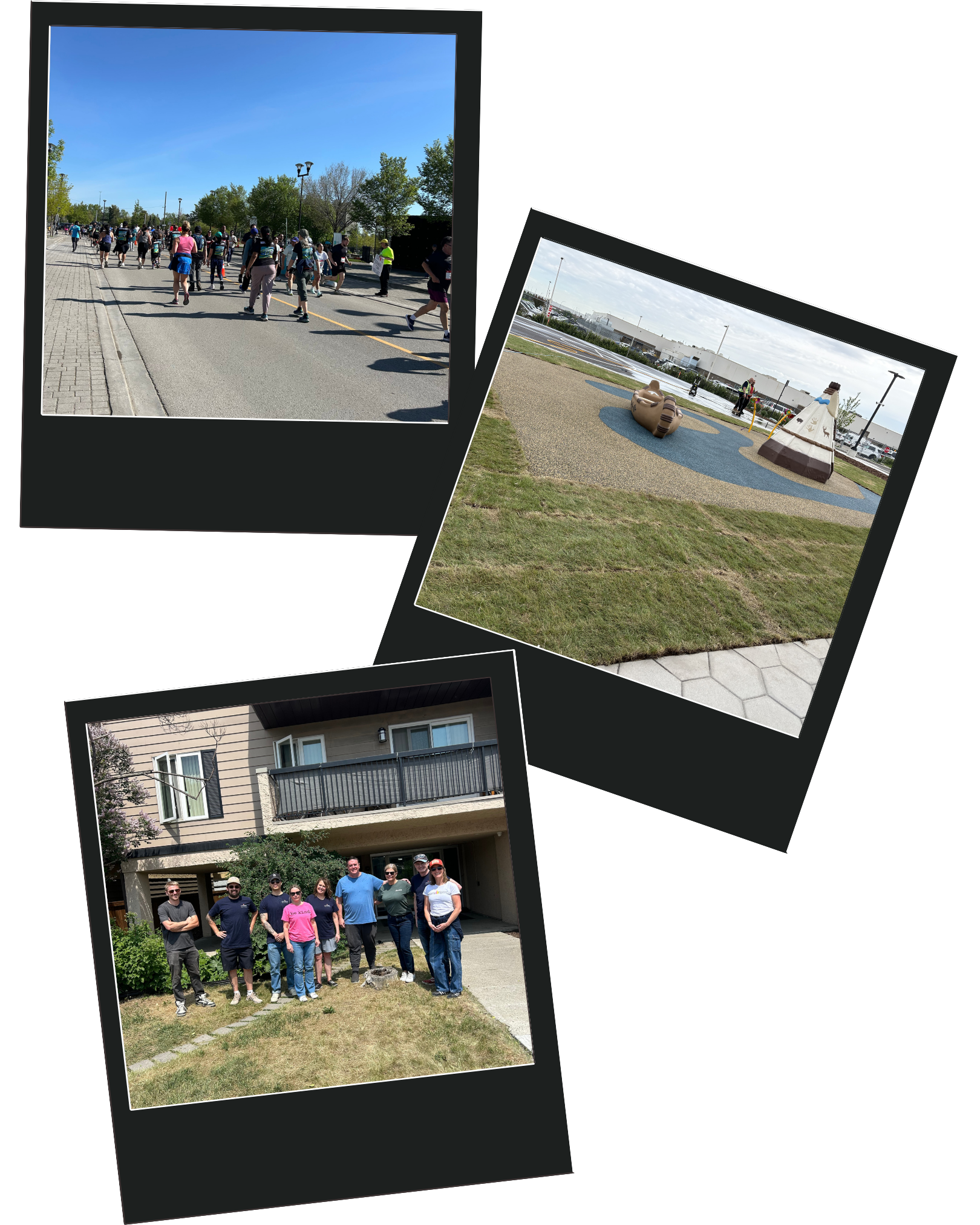
In May 2025, five faith-based groups came together for our annual Walk for Housing, raising $8,700 to help pay down the mortgage on our Bankview building. We are deeply grateful to everyone who spent their afternoon walking, fundraising, and sharing our story in support of affordable housing.
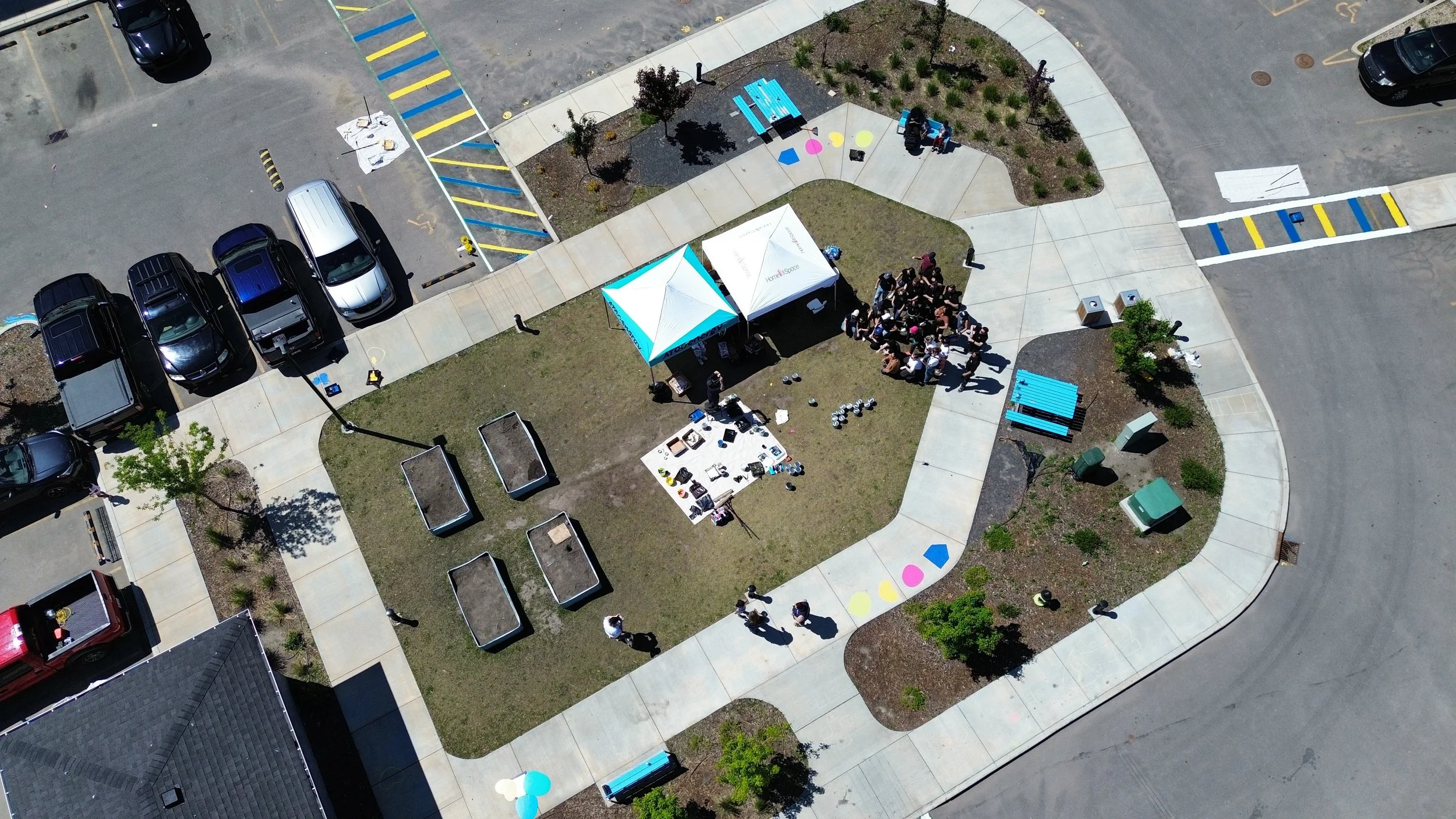
Throughout the year, volunteers also helped refresh and revitalize the outdoor spaces at our buildings, creating welcoming environments that residents can take pride in. We extend our sincere thanks to the volunteer teams from the Calgary Real Estate Board, Ecclesiastical Insurance, Acera Insurance, ATCO Energy, and BMO for their time, care, and enthusiasm.
The spirit of community was equally evident at the 2026 Calgary Marathon, where runners, supporters, and fundraisers helped Team HomeSpace raise more than $5,000 for our family townhomes development in Evergreen. Their energy and commitment made a meaningful difference, and we look forward to participating together again next year.
We are also grateful to The Calgary Foundation and the Government of Alberta, through the Community Facility Enhancement Program, for their generous support in building a playground at our recently opened family townhome development in Whitehorn. A safe and welcoming place to play is an important part of building a thriving community, and this new space gives children the opportunity to explore, build friendships, and create lasting memories in their new home.
This year, HomeSpace was honoured to receive $10,000 through Apartments.com’s Thanksgifting Campaign, an initiative that supports non-profit organizations working in the multi-family housing sector. These funds contributed to the construction of our Whitehorn family townhomes project and helped create more affordable homes for Calgary families.
Finally, we extend our heartfelt thanks to our monthly donors, whose ongoing support helps maintain our homes—from repairing leaky taps to fixing creaky floors—ensuring residents have safe, comfortable, and dignified places to live. Their consistent generosity, alongside every gift large and small, makes our work possible.
Thank you, Calgary, for standing with us and helping build a community where everyone has a place to call home.
Our Staff
HomeSpace in the News
-
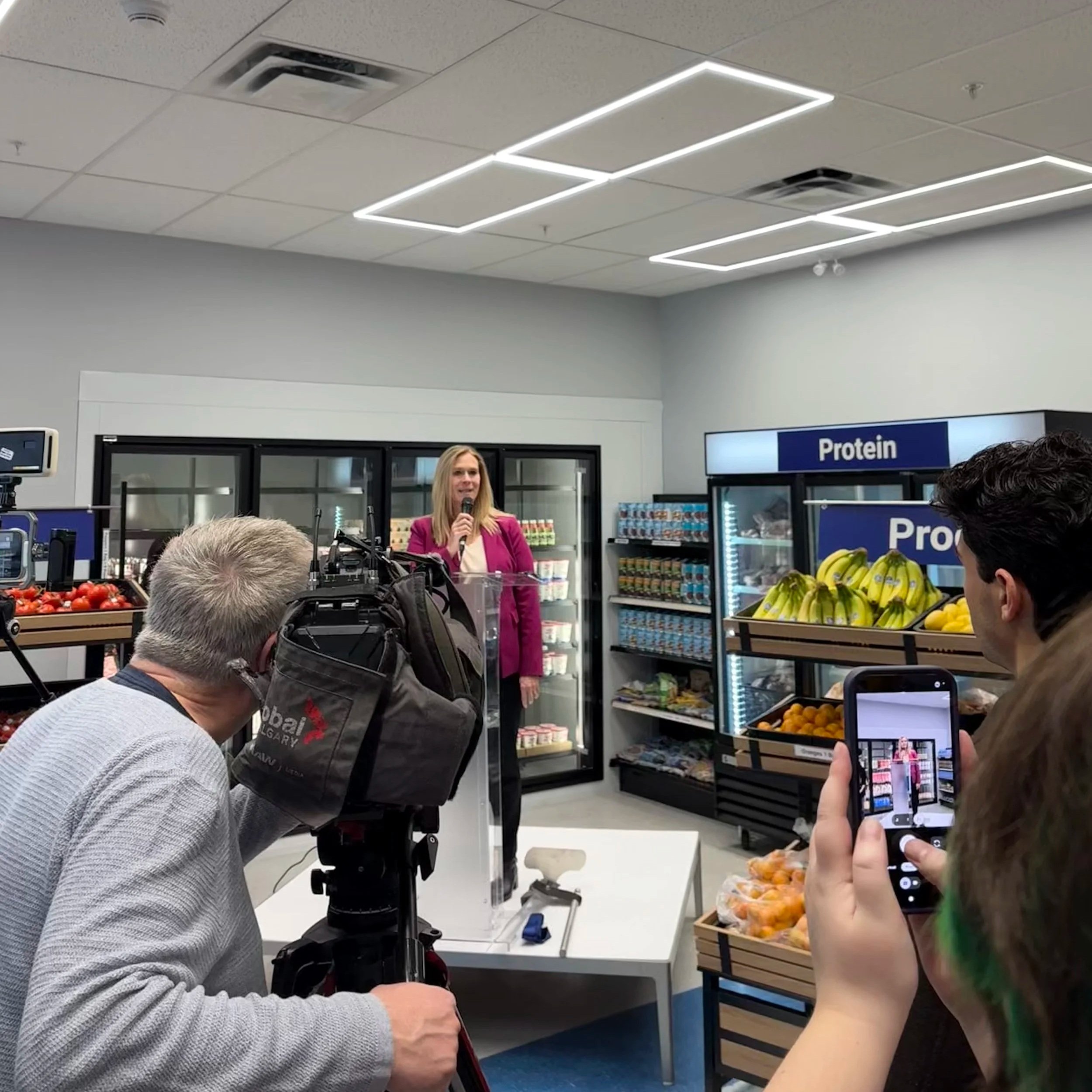
Calgary Food Bank opens grocery store-style location in downtown
-
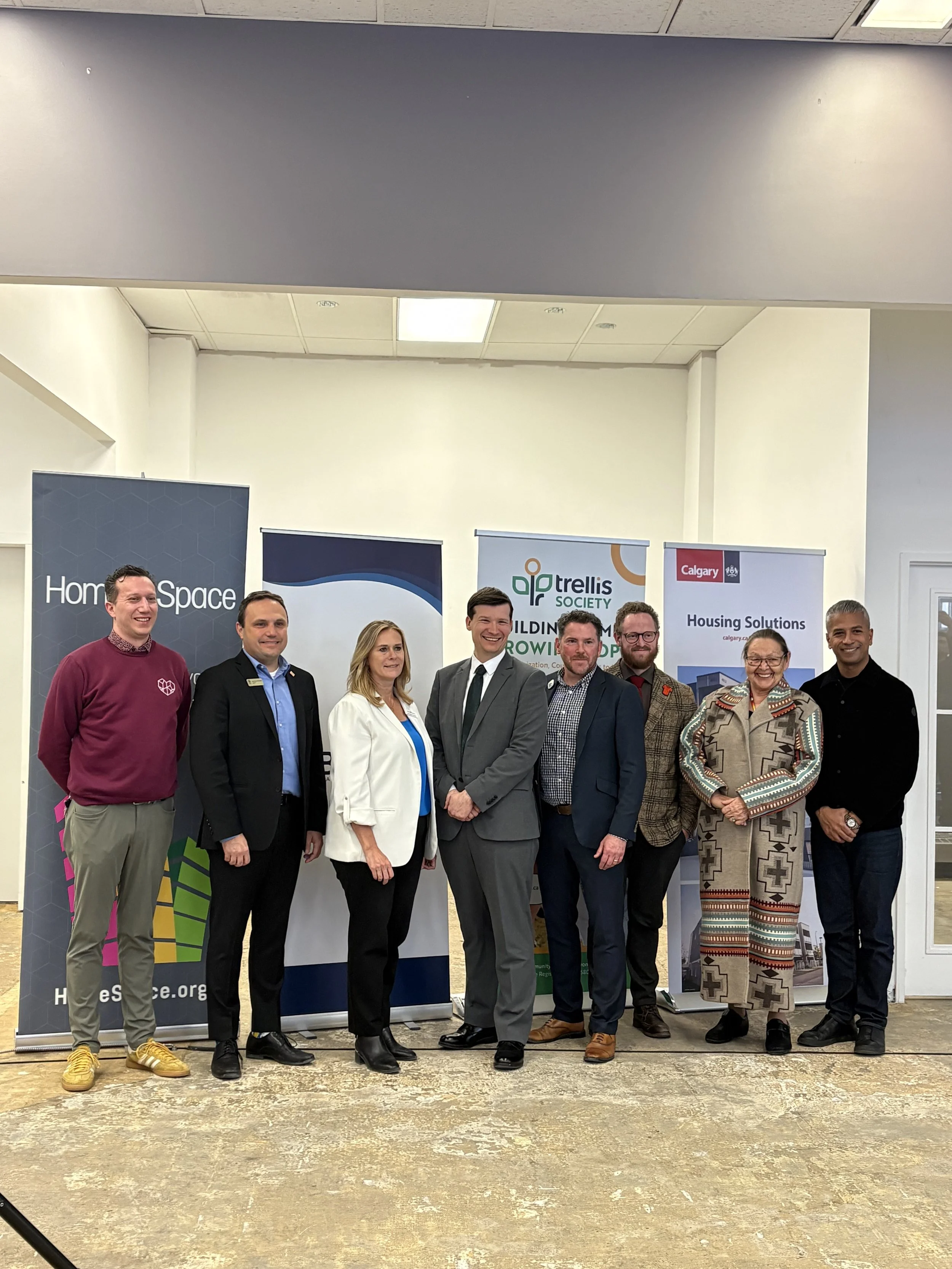
New office conversion projects bringing nearly 130 affordable homes to downtown Calgary
-
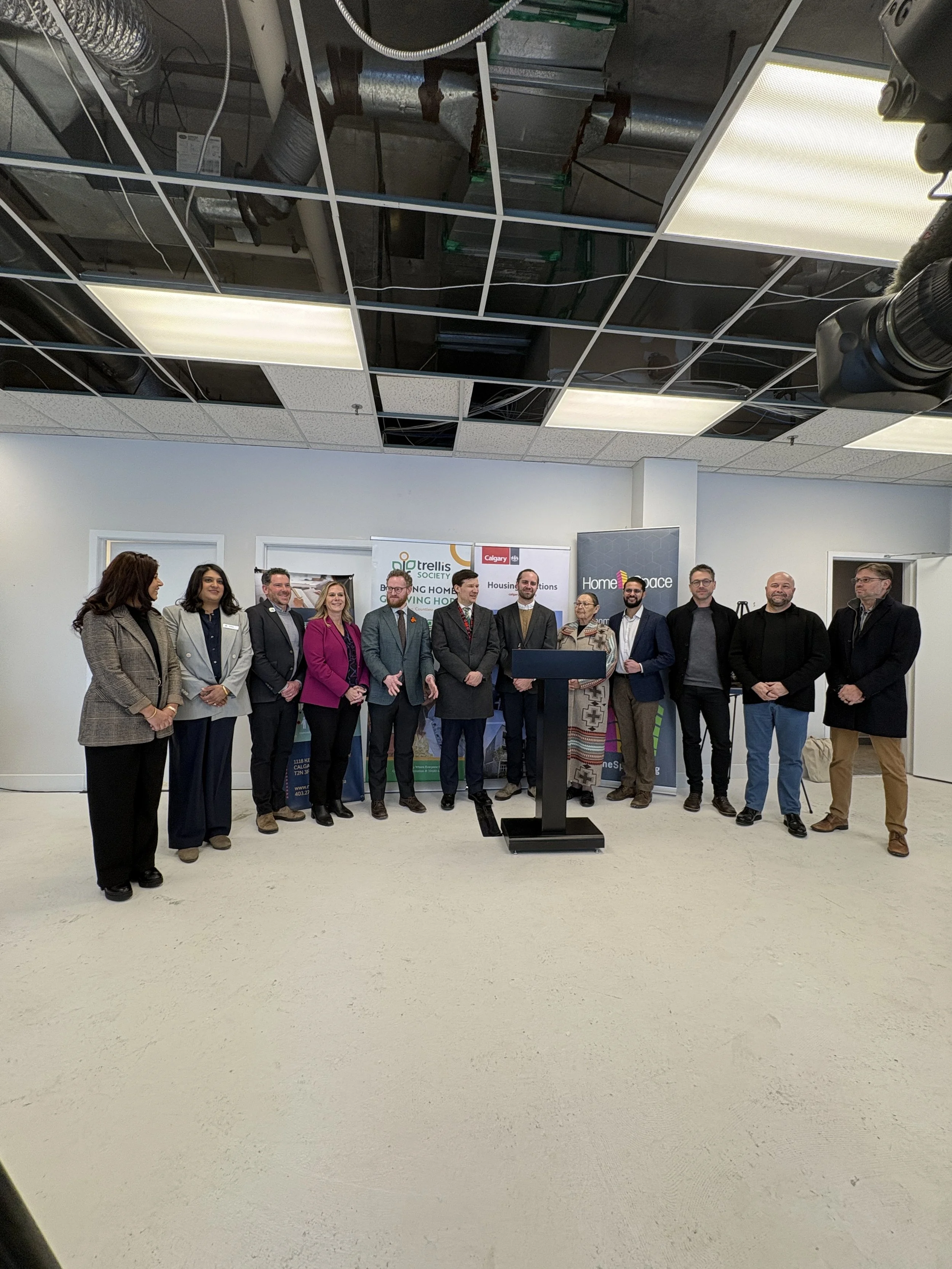
Calgary housing initiative awards $29.3M to build 566 non-market-homes
-
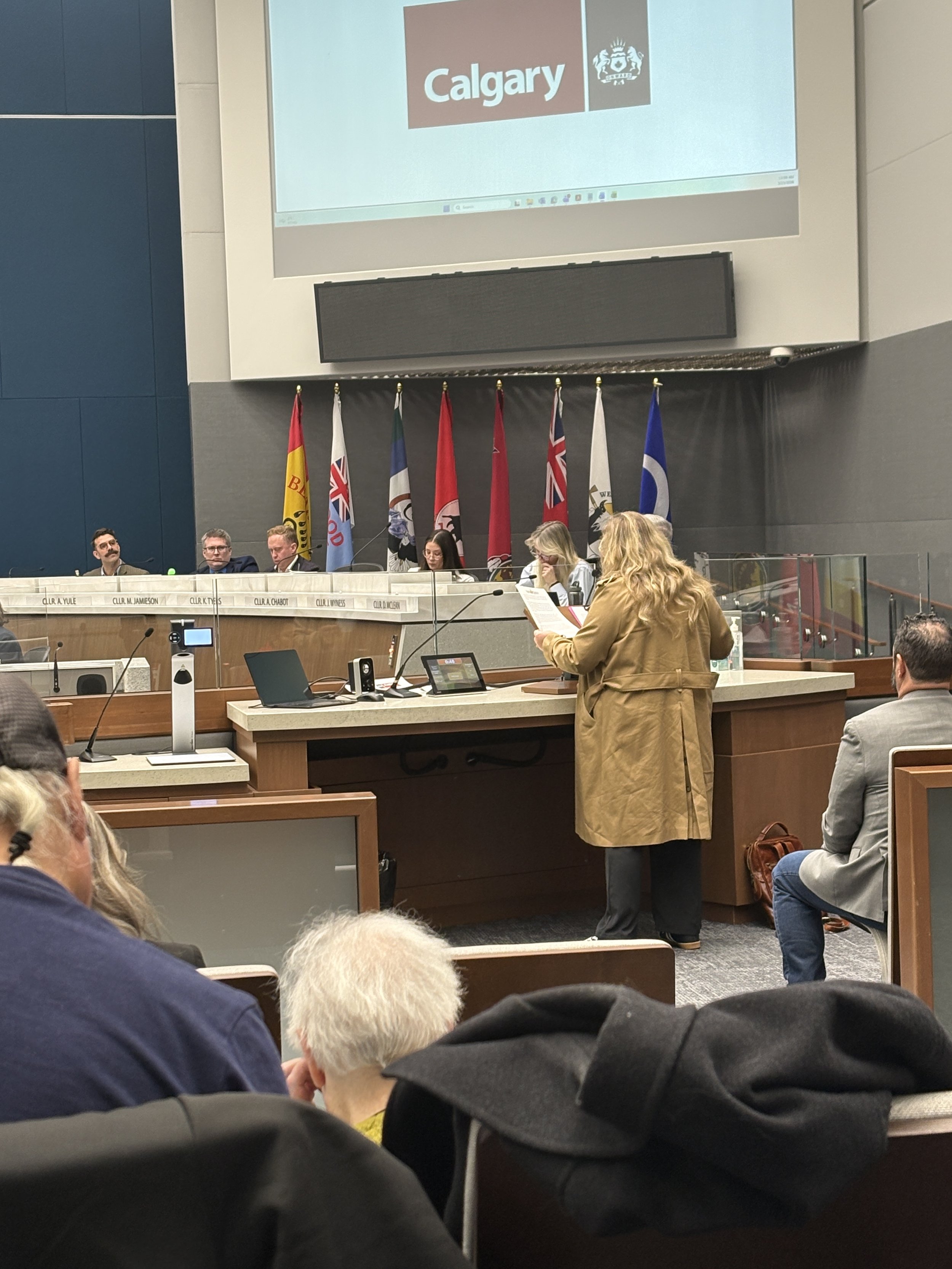
Marathon public hearings on blanket rezoning kick off at Calgary city hall
-

'A global phenomenon': Calgary Marathon draws record number of participants, following worldwide trends
2025-26 Financial Summary
Number of Units by Unit Type
Number of Units by Lease Type
2025-26 Grants & Donations Breakdown
A Message From our Board
As we mark 10 years of HomeSpace, this moment offers both reflection and momentum. Over the past decade, we have grown from an ambitious idea into a trusted housing provider. The team continues to serve and evolve alongside our Calgary community.
That growth has been especially tangible this year. Both projects at Whitehorn and Evergreen have expanded access to stable housing for families. The office conversion on 8th avenue will increase homes in the downtown. And the new Permanent Supportive Housing opportunity underscores our focus on providing homes for those with the most complex needs.
Over ten years, the housing landscape has shifted significantly in Calgary, reinforcing the essential role of organizations like HomeSpace in creating housing that is dignified and supportive.
Huge congratulations to our incredible CEO, Bernadette Majdell, her leadership team and staff, whose care and expertise bring each project to life. They have stewarded this mission forward over the last decade.
Together, we are continuing to grow with purpose to build a stronger foundation for the next decade. On behalf of the Board at HomeSpace, thank you for your endless support.
— Lourdes Juan
Outgoing Board Chair, HomeSpace Society Board of Directors
